
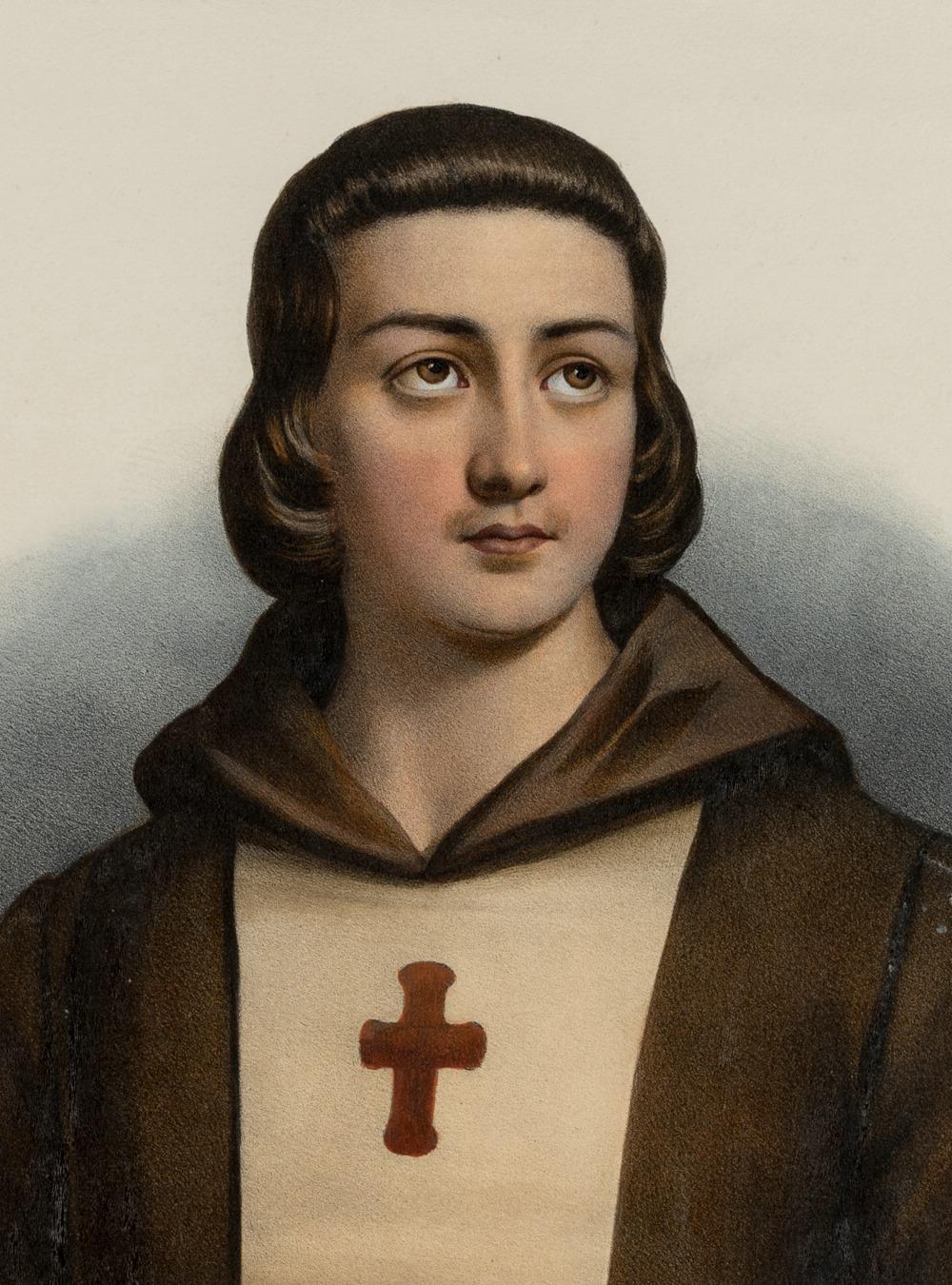
Peter Abelard was one of the most influential thinkers of the twelfth century, renowned both for his intellectual brilliance and for his turbulent personal life. He distinguished himself in the fields of logic and theology, challenging established authorities and advocating the use of reason in the understanding of faith. His most famous work, Sic et Non, exemplifies this method by setting contradictory opinions of religious authorities against one another, encouraging critical reflection rather than passive acceptance. Abelard became a central figure in the schools of Paris, attracting large numbers of students and provoking the vigorous debates that helped shape the development of Scholastic philosophy.
His story is inseparable from his relationship with Héloïse of Argenteuil, his student and lover, with whom he shared one of the most celebrated and controversial romances of the Middle Ages. Their affair led to a secret marriage but also incurred the wrath of Héloïse’s uncle, Fulbert. In revenge, Abelard was brutally castrated, an event that profoundly altered the course of his life and eventually led him into monastic life. Despite the tragedy, the correspondence between Abelard and Héloïse remains one of the most moving testimonies to love and suffering in medieval literature, revealing an intellectual and emotional bond that endured long after circumstance had conspired against them.
The ever-reliable Melvyn Bragg explores the story of Abelard and Héloïse in one of the finest episodes of BBC Radio 4’s In Our Time.
Excluindo as imagens criadas pelo autor deste blog, as imagens utilizadas neste post têm as seguintes lincenças:
Abelard et Heloise – Par Auteur inconnu — Cropped File:Character sketches of romance, fiction and the drama (1892) (14781886551).jpg, Domaine public, https://commons.wikimedia.org/w/index.php?curid=3025132


Termos e Condições