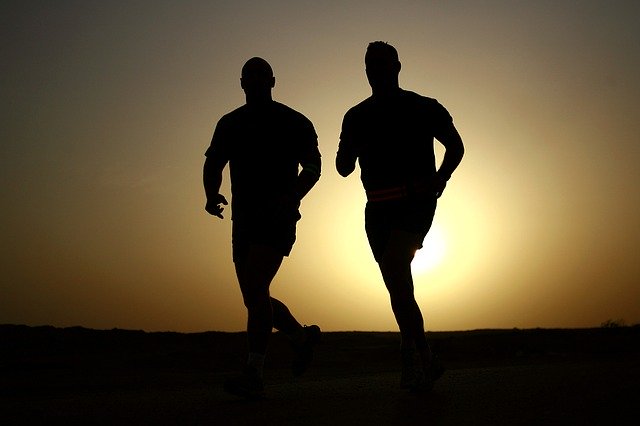
“Men’s and women’s hearts are moved more by examples than by mere words, and they find comfort in witnessing the suffering of those who, when one compares miseries, deserve even greater compassion than themselves. That is why I always recount the path that brought me here, so that those who seek me out may discover how light their burdens truly are when set against my tribulations, and thus face their own obstacles with greater ease.”
Sounds like something lifted straight from a Technicolor biblical epic, doesn’t it? That was how Abelardo, the hermit of Corvo, welcomed us, after a brief exchange of formal greetings, hands shaken with the solemnity of those who have nowhere to be and names exchanged with the air of people who know they will remember none of them. And, just as promised, he immediately began, without anyone asking, to tell the story of his downfall, a tale he had probably repeated so many times that it had become the standard prologue for anyone joining the retreat.
“I am not from here. Not from the countryside. Not from the sea. I am a child of the city. A few years ago, I had another name. Bel.”
He paused, waiting for some effect upon his audience, cleared his throat, and continued.
“Short name. Athletic body. Magnetic presence. I worked in the gyms of Paris. I taught everything: zumba, meditation, chakra stretches, lower-back stretches. Within three months I had more followers than the competition and more appointment requests than there were hours in the day. Then came the invitations: television appearances, sportswear campaigns, songs on the radio with rhythms that entered through the hips and climbed all the way to the throat. I stopped having time to breathe. It was exhaustion on steroids; it was fame with protein.”
He paused again theatrically and glanced at the bracelet of his top-of-the-range sports watch, his biceps contracting for no apparent reason.
“And then I met Héloïse. She walked into one of my classes with the eyes of a martyr and the résumé of a banker. Niece to a supermarket tycoon, she was a top executive, shaped by the finest universities and groomed for a corporate throne. She fell in love with me. Or with what I represented. She gave up everything: position, inheritance, life. She sent in her resignation letter signed only with initials. CU. CEO.”
Another dramatic pause. A smile crossed his face, though it looked suspiciously like a grimace of pain.
“Her uncle was less amused. He bought the gyms where I worked, commissioned a defamatory documentary, and buried me beneath so many scandals that eventually I no longer knew which ones were true. He castrated my success. And we retaliated by marrying in secret. We tried to resist.”
He sighed, like a man preparing to lift a particularly heavy weight.
“We joined a reality television show, convinced that we could turn things around. But we did not know how to play the game. We talked about love and philosophy. The audience wanted shouting and drama. She even quoted Aspasia…”, he coughed, “…and I asked her to pray in the gym. We were… We were honest.”
Another theatrical pause.
“In the end, she joined an NGO. And I came to Corvo.”
He placed his hands on his hips, as though preparing for something physical, then suddenly folded in on himself like a man feeling the ache of an old wound. A moment later he straightened up, opened his arms, and welcomed the latest flock of followers.
“And now, here we are, at a spiritual retreat for those who wish to unite mind and body and achieve a holistic vision of the world that is, at the same time, individualistic. I know, I know… It’s difficult to explain. But it all begins with rigorously doubting everything we think and everything we do. The key to wisdom is to question, constantly and frequently. Only through doubt do we seek answers, and only in that search do we glimpse truth. We affirm something and then affirm its opposite. We say yes, and then we say no.”
“And the synthesis?” asked the Captain, with a sardonic smile.
“What do you need synthesis for?”, Abelardo replied immediately. “This need to discover a universal essence is the great error of our society. These synthetic and universalising concepts, like humanity, for example, are merely names, conventions used to group individuals together. They do not correspond to any essence distributed equally among us all. We are composites. And when we look at ourselves, we should do so as one looks upon the Earth from space, not from the summit of a mountain.”
I could have sworn I heard the pilot whisper “Amen.” But by then Bel had already been surrounded by a group eager for the afternoon fitness session.
“Remember: intentionality matters, but action is what counts. Without action, there is no mutation. Let’s change those minds! Let’s change those bodies!”
With startling abruptness, he pulled the white linen tunic over his head and stood before us in Lycra shorts and a fitted T-shirt emblazoned with the words “SIC ET NON” in large capital letters. He stood in the centre of the group, which had assembled along the rim of the crater like a congregation of aspiring penitents. There were bodies of every conceivable shape and size, some toned, others frankly soft, all united by the promise of muscular transcendence and ontological clarity.
Captain Jackdaw gestured for us to join them. At last I understood why he had insisted we come dressed in sportswear.
The warm-up began with a circle of closed eyes and synchronised breathing, everyone seated cross-legged. Abelardo, or “Master Bel”, as one particularly enthusiastic disciple called him, guided us in a serene voice, as though conducting a shamanic ceremony sponsored by some mineral water company.
“Breathe with intention… Inhale the concept. Exhale the prejudice… Feel your hamstrings opening like the doors of perception.”
My hips were groaning, but I endured the strain without complaint. Someone behind me let out a nervous laugh, only to have it immediately smothered by a collective “Shhhh…”. I kept my eyes half-open, just in case. One never knows what may happen when metaphysics is invoked in the lotus position.
Then we stood up and started slow circular movements of the arms, which Abelardo referred to as “Epistemological Rounds”.
“Rotate your shoulders as though revisiting old certainties… Mobilise your trapezius muscles as though shifting the dogmas you have been carrying all these years…”
Then he combined the circular arm movements with gentle bends of the knees. It was a familiar exercise from my childhood.
“Let your knees crack with gratitude. Your body is reminding you that you are finite and fragile.”
“And old,” sighed the Captain beside me.
The group followed along with almost liturgical obedience, and for a moment I had the impression that we were rehearsing an experimental contemporary dance performance about something hopelessly abstract. The Crisis of Western Rationality, perhaps.
In the distance, the crater mist was beginning to rise like a theatre curtain. There was a peculiar sense of anticipation in the air. Only then did I realise that this had merely been the warm-up. The real performance was about to begin.
“We shall begin with the ‘Gluteal Contradomain’, also known as the ‘Sit-Don’t-Sit!’”, announced Bel in a tone of voice of someone convinced of he belonging on a stage.
“Bend your knees, stick out your buts, and keep your gaze fixed upon the horizon as though confronting the existential absurd! This is not merely a squat. This is not merely a squat. This is an evacuation of the emptiness of routine!”
The group obeyed amidst sighs and grunts, with an almost devotional zeal.
“A dangerous thing to contemplate in this position.”, muttered the Captain.
“Now breathe with intention. Intention is everything. More important than form, more important than execution, more important than results. The moral judgement of an exercise always begins with the intention that animates it. If you lower your arms out of shame, it is worthless. If you tighten your abdominals out of vanity, you are lost. Do it for love! Do it for justice! Do it for a pure idea of the good!”
Someone toppled sideways, but nobody interrupted the exercise.
“We continue with the ‘Abdominal Syllogism’! Lie down! Hands behind the neck, elbows wide, and prepare yourselves. Upwards, major premise: the body is the mirror of the mind; Downwards, minor premise: the mind is full of rubbish. Conclusion: crunch until you sweat the truth!”
The movements were performed in synchrony, accompanied by moderate grunting.
“Do not forget the logical structure of mental acts! Every contraction must correspond to an internal operation! Premise, premise, conclusion! Inhale, inhale, exhale!”
It was almost impossible to suppress the urge to laugh, yet nobody seemed remotely close to breaking. Some participants were already as red as philosophical tomatoes, but it was the effort rather than restrained laughter that accounted for their colour. The seriousness of the group made me blush, and I concentrated on the exercises.
“Back on your feet! We move now to the ‘Dynamic Paradox’! Advance with the sole of your left foot like the tortoise, and retreat with the heel of your right foot like Achilles. Advance shouting ‘Sic!’ Retreat shouting ‘Non!’”
He demonstrated with sweeping strides and dramatic cries.
“SIC!”
“ET NON!”
“SIC!”
“ET NON!”
The group followed resolutely.
“This is dynamic logic! Embodied variable dialectics! You are not merely exercising your thighs, you are training doubt itself! To advance and retreat, to accept and refuse: this is the fundamental movement of consciousness! Truth resides in the interval between the two steps!”
The crater echoed with the rhythmic cries.
“SIC!”
“ET NON!”
“SIC!”
“ET NON!”
One lady slipped and nearly landed on her backside, but Abelardo helped her to her feet with all the solemnity of a priest lifting a penitent from the confessional.
“Now a pause for water and apophatic breathing. Imagine that the air is an ineffable concept. I inhale… yet I cannot describe what I feel. I exhale… yet I deny what I have just felt. We are now at the very heart of negative theology, my dear friends. Only through negation do we approach the truth!”
“Privatio aeris, death by sufocatio…”, whispered the Captain in near apoxia.
The pilot, who had stationed himself from the beginning in the front row, wearing a baseball cap turned backwards with the word INTUITION embroidered across it in military stencil lettering, wiped the sweat from his brow with his forearm and murmured to anyone willing to listen.
“He’s right. The gluteus is a metaphor too.”
I made a mental note to remember that one the next time I delivered a rhetorical slap to a particularly fine metaphor.
Abelardo resumed with renewed energy.
“One final exercise! The ‘Argument by Absurdity’! Jumping jacks! Each jump represents an impossible proposition. Let’s go!”
“The world is shaped like a cucumber!”
(jump)
“The soul weighs twenty-one grams and has cholesterol!”
(jump)
“Destiny has illegible handwriting!”
(jump)
When the pace finally slowed through sheer exhaustion, Abelardo gathered the group into a circle. We were all spent, our breathing uneven and ragged.
“That’s it,” he said, clapping his hands as he surveyed us. “I like to see that esoteric glow in your eyes. And remember: only movement generates mutation. Thinking is not enough. Faith without works is dead. The mind without glutes is an abstraction. Sic…”
“…et non!” the group replied in unison.
Then he lowered himself onto his back, arms slightly apart from his body, palms turned towards the sky. He closed his eyes, drew a deep breath, and resumed his priestly tone.
“Now you are ready. Ready for silence. Ready for emptiness. Ready for the inward crossing. Assume shavasana, the corpse pose.”
And, like the living dead, more exhausted than zombies, the group descended to the dirt. The pilot gave a nearly ceremonial bow before lowering himself onto the ground, lying flat on his back and breathing with theatrical deliberation.
The Captain and I lasted another fifteen minutes before finally getting to our feet and slipping away. With some difficulty, it must be said. Not so much because of the exhaustion, but because there was something irresistibly beautiful in the sight of our bodies meditating amidst nature.
I returned to the village at a leisurely pace, my muscles exhausted and my spirit strangely invigorated, engaged in a form of dialectical shadow-boxing. Now I am lying in my room, listening to the sound of the wind and trying to arrange my own syllogisms. In a few days, if the sea allows it, we shall set a course westward. The Atlantic crossing awaits us. And I… I am afraid.
To borrow one of Abelardo’s abdominal syllogisms: if everything that lives must inevitably journey into the unknown, and if no one crosses into the unknown without fear, then fear may simply be another form of awareness of the limits of our map.
Be that as it may, within a few days there will be nothing around us but water, horizons in every direction, and miles upon miles of ocean beneath the keel. And I still cannot tell whether fear is a warning to turn back or an invitation to move forward. Perhaps, as Abelardo would say, that is merely another way of saying “Yes… and No.”
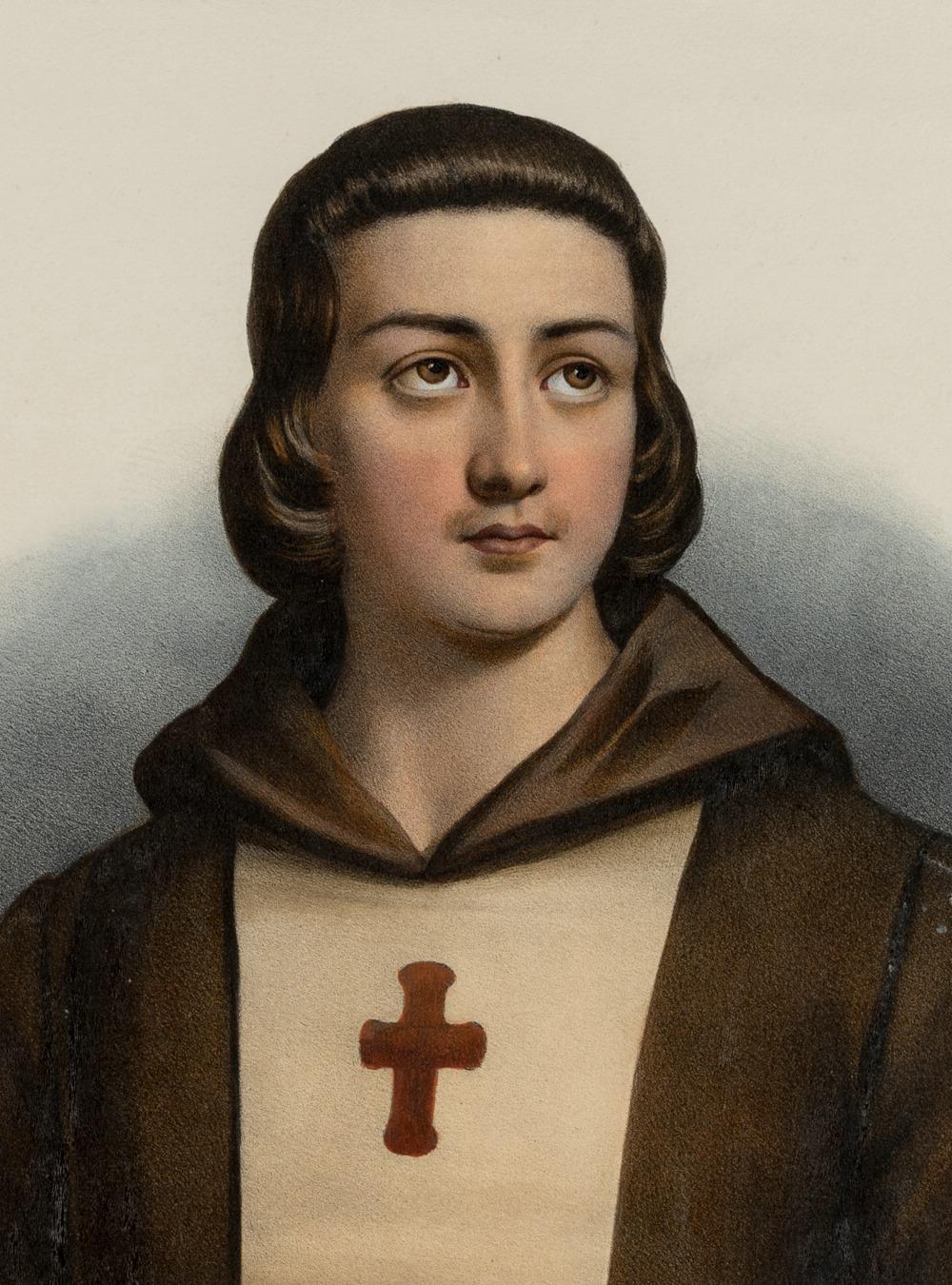
Good form, good substance
His romantic relationship with his disciple Héloïse brought him into the spotlight, but Abelard was already one of the leading figures in philosophical fitness, devoting himself to the problem of universals and the mysteries of nominalism.
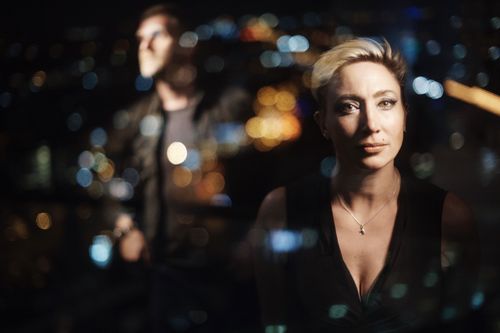
Music for Endless Running
The British electronic music duo Hybrid, formed by Charlotte James and Mike Truman, is one of the great success stories of electronic music and video-game soundtracks. Abelardo uses their music, with considerable success, to keep everyone running long after they thought they had reached their limit.
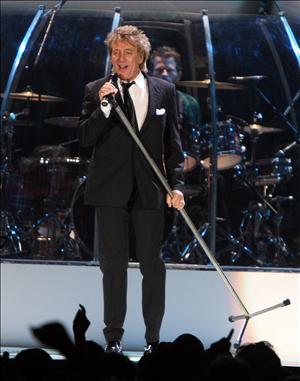
Broken Dreams
Recorded in 1969 by the Australian band Python Lee Jackson, featuring the then-unknown Rod Stewart on vocals, the song was re-released three years later as Stewart’s fame began to rise. Stewart became a star; the band fell apart.
Excluindo as imagens criadas pelo autor deste blog, as imagens utilizadas neste post têm as seguintes lincenças:
Abelard et Heloise – Par Auteur inconnu — Cropped File:Character sketches of romance, fiction and the drama (1892) (14781886551).jpg, Domaine public, https://commons.wikimedia.org/w/index.php?curid=3025132
Rod Stewart: by Gorri, CC BY-SA 3.0 <https://creativecommons.org/licenses/by-sa/3.0>, via Wikimedia Commons https://commons.wikimedia.org/wiki/File:657105w.jpg


Termos e Condições