The encounter with the trimaran broke our isolation and dispelled the feeling that we were alone in the world. Yet it also had the curious effect of awakening a longing to be back on land, to see people around us again, to witness things happening instead of the endless rhythm of the waves.
“It’ll still be a little while before we reach land, but you’ll get to see some new faces tomorrow.”, the captain revealed.
More encounters in the middle of the ocean? Apparently, the captain had received a radio message informing him that Captain Nemo, one of those captains I’d met in the Azores, was waiting for us aboard his submarine.
Our three crewmates were delighted at the prospect of meeting a submarine in the open sea. I, on the other hand, panicked immediately. “Captain Nemo has a submarine? Like the real Captain Nemo?”, I thought. That couldn’t possibly be true. It had to be a joke.
When I looked at the captain, I saw him studying my expression before giving me a wink. “Of course. A joke! We’re meeting an ordinary boat.”, I concluded to myself.
The day passed pleasantly enough, each of us keeping to our own corner, if such a thing is possible aboard a sailing yacht, and by dinnertime we were all in good spirits and blessed with healthy appetites. That evening was especially cheerful. Dinner was generously accompanied by drinks, buoyed by the reassuring knowledge that fresh supplies would soon be within reach. And although a favourable wind continued to carry us towards Canada, the sea was remarkably calm, allowing us the luxury of a long, unhurried meal without the usual rolling of the boat.
By the end, with stomachs comfortably full and minds pleasantly dulled, the inevitable debate erupted. As always, everyone’s thoughts had begun drifting on the vapours of alcohol. This time it all started with an impressively loud belch from Russo.
“Weren’t you taught any manners as a child?”, Lucky asked, visibly irritated.
“And which kind of education are you talking about?” Russo shot back. “The one you advocate in your books? Making children wear damp, uncomfortable shoes?”
With a surprisingly agile movement, despite his drunkenness, Russo lifted one leg and proudly displayed his bare foot above the table.
“It’s far better for children to walk barefoot and get their feet wet in nature than to soak them inside leaky shoes. Do you honestly think making children suffer builds physical resilience?”
On one side, the Swiss argued that children should be allowed to develop their natural abilities so that what is natural in human beings could survive once they entered civic life. On the other, the Englishman accepted that children’s innate capacities should indeed be nurtured but insisted that the child is a blank slate requiring guidance. Unconcerned by the argument, Hobbes dozed upright, gently swaying with the Nomad.
“And then they end up with no table manners, like you, and lose the use of reason,” Lucky retorted.
“You and your obsession with reason…” Russo sighed in exasperation. “Do you really think a child understands the lectures you give them? It’s just like the song: ‘The boy is badly behaved; the boy is a little bourgeois.’ Let the poor child be happy, for heaven’s sake!”
Lucky frowned as Russo’s increasingly revolutionary tone became impossible to ignore.
“You know what your problem is? Huh? Do you know?”, Russo continued. “Your problem is that you want to raise rational, virtuous, disciplined little gentlemen who know how to move through society. And to hell with the common folk, right? They don’t even need an education!”
“All children, rich and poor alike, should be prepared by society for social life and active civic participation.”, Lucky defended himself.
“Prepared for what? To become magistrates? Merchants? Soldiers? Obedient civil servants? You spend your whole life thinking about the profession a child will one day have and forget the person that child already is.”
“That’s absurd.”, Lucky said, clearly uncomfortable.
“No, what is absurd is taking a child and treating them like a professional project. Before training a lawyer or an accountant, God forbid, we should form a human being. The rest comes afterwards.”
“And you take no account of the society in which he is going to live?”
“Society corrupts the child!”, Russo retorted. “Haven’t you understood that yet?”
“So what do you want? Everyone living in isolation in the wilderness?”
“Yes, yes…” Hobbins murmured with his eyes closed. “Man is man’s worst enemy.”
The others fell silent for a few seconds, waiting to see whether he really intended to join the debate, but soon realised it was more the grog than Hobbins speaking.
“Perhaps it wouldn’t be such a bad idea to spend a while in isolation like Robinson Crusoe. In fact, I’ll go even further. What children ought to watch until they’re twelve are programmes like Survivorman.”, said Russo in a tone that sounded playfully provocative.
Lucky’s face twisted into a grimace as he struggled not to spray the mouthful of grog he had just taken.
“Good Lord! I’m entirely in favour of physical training and of the need for a healthy body to sustain a healthy mind, but what you’re saying is completely ridiculous!”
“I thought you’d like the suggestion. Your idea of ‘healthy training’ is even worse. You’re practically torturing children!”, Russo replied. Then, adopting an exaggeratedly paternal tone, he continued, “Come on, just a little longer. Go on, one more bath in freezing water. Come on.”
I was reminded of Carlos da Maia and the education old Afonso had given him.
“You’re not educating children! You’re training seals in a marine zoo!”, accused Russo.
He gripped the little shot glass between his teeth and began clapping his hands like a sea lion but lost his balance and slid across the table. He only avoided falling because he grabbed the captain’s shoulder.
“There, you see?”, he said, recovering his composure with remarkable dignity for someone in that position. “Natural balance.”
“You nearly fell over.”
“Experiential learning.”
“Experimental drunkenness.”
The captain spoke with unmistakable sarcasm.
“The line between the two is becoming increasingly thin.”
Russo ignored him and resumed his attack, as though he had suddenly remembered something.
“Do you know what your problem is?” Once again, the rhetorical question was aimed more at exposing Lucky’s ignorance than at seeking an answer. “You fail to understand that children should learn through sensory experience and according to their stage of development. Only after the age of twelve should they come into contact with subjects that require the use of reason.”
“If you do that, by the time they’re twelve they’ll already be set in their ways. You won’t be able to shape them anymore. You won’t be able to educate them.”
“If children were capable of using reason in the way you claim, they wouldn’t need us. They would educate themselves.”
“That’s completely idiotic!” Lucky was beginning to lose his composure, although it was difficult to remain calm in the face of Russo’s tone and attitude. “That’s precisely what the tutor is there for. To provide guidance, establish habits and develop reason. The mind is a tabula rasa.”
“Ah, habits! Social conditioning! At last, I’ve understood your problem.”, Russo said, pouring himself another measure of grog. “You believe morality can be taught through repetition.”
“It’s better than teaching it with vegetables.”
I didn’t understand the reference, but it must have been one of those stories Russo tells during his workshops.
“Beans and melons taught more about justice than a thousand sermons,”, Russo replied.
“There you go again.”
“Because I’m right. A child learns when they experience the consequences of their actions. They learn when reality answers back. Not when an adult wags a finger in front of their face.”
“So your plan is to wait for life to educate the child?”
“My plan is to let the child discover. There’s a difference. You think you’re the all-powerful educator, but Nature is the one that educates. Man merely opens the path.”
I cleared my throat softly. Russo looked at me to see what I wanted, then turned back to Lucky without realising my indirect reproach.
“We cannot go against the child’s nature. The education we provide must meet that nature. And along Nature and Man, there are the circumstances of life, the things that happen to us. Morality is not born from obedience or physical punishment. It is born from lived experience and from learning through the consequences of our actions.”
Lucky let out a dry laugh.
“Morality is born from the formation of character.”
“And how do you form character?”
“Through habits. I agree with you that physical punishment creates nothing but fear and a false appearance of moral behaviour. But children value the esteem of those around them. It is in their nature. Praise for good behaviour and disapproval of bad behaviour teach children to govern themselves.”
Russo stuck out his tongue at Lucky in challenge.
“You’re teaching children to tune their behaviour to other people’s gaze.”, Russo retorted.
“I’m teaching them to live in society.”
“You’re teaching them social anxiety before you’ve taught them freedom.”
“Freedom without self-control is merely another word for whim.”
“I believe a child should experience the consequences of what they sow and that when the educator says ‘No’, it’s ‘No’, full stop. You base virtue on applause. It’s nothing more than vanity.”
“It’s not applause. It’s recognition.”
“The same thing, but less pretentious.”
Lucky shook his head.
“It’s no wonder your pupils end up running through the woods chasing butterflies.”
“At least they don’t spend their lives wondering whether anyone approves of what they’re doing.”
“No. They simply pull other people’s melons out of the ground and only afterwards discover that actions have consequences.”
Russo burst into laughter.
“Exactly. And they’ll never forget the lesson.”
“And how long are you prepared to wait for life to teach them everything else?”
“As long as it takes.”
“That’s what worries me. What you propose is to spend years waiting for a child to discover on their own what a good tutor could teach them in a single afternoon.”
“Because what one discovers for oneself stays forever.”
“And what if the child never discovers it? Where does the human transmission of human knowledge fits into all this? Must every child learn everything for themselves?”
Russo opened his mouth to answer but remained silent.
Lucky leaned forward.
“Exactly.” he said. “The story of the beans and the melons is all very well. But I wouldn’t entrust a child’s education to the hope that a vegetable patch might produce a moral revelation.”
On the other side of the cabin, Hobbins opened one eye.
“Vegetable gardens produce territorial conflicts.” Everyone looked at him. “That’s how wars begin.”, he added. Then he closed his eye again.
After that, conversation began to degenerate into the differences between men and women and I went up on deck. I wasn’t in the mood to listen, nor did I have the patience to argue with drunken political consultants, however likeable they might be.
But I kept thinking about the discussion on education. It may well be important to teach children how to live in society, but is that what today’s educational system is really trying to do? Or is it merely a long process of professional training culminating in universities, where the practical nature of STEM disciplines is steadily taking up more and more space at the expense of the humanities and other fields more concerned with the formation of the person?
For all the educational reforms, we continue to apply an industrial model of education instead of an organic one. I fear that our education is becoming increasingly a process of formatting efficient workers with the ambition of being omnipotent consumers.
Don’t you think?

School of Vagabonds
“School” is one of Supertramp’s most incisive reflections on education, authority, and conformity.
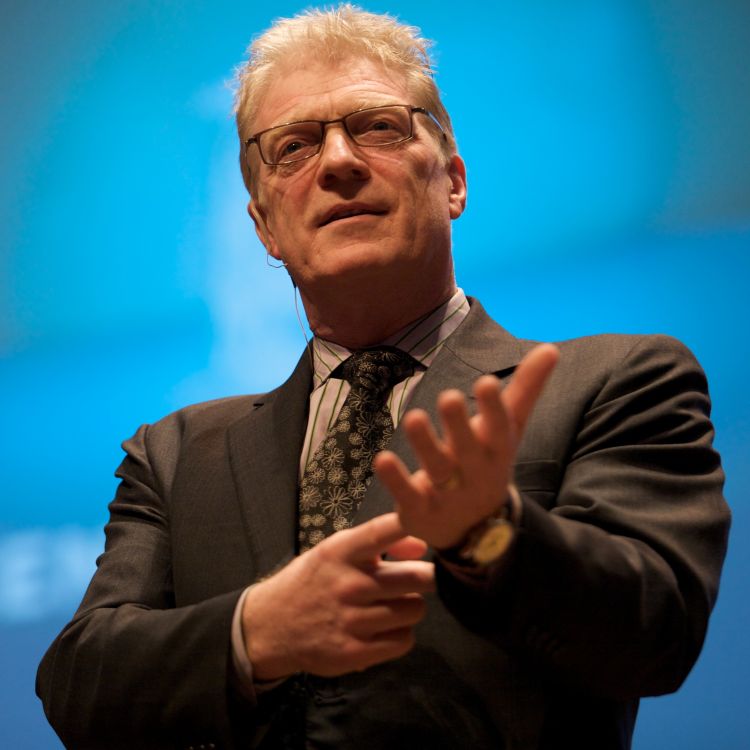
Sir Ken Robinson
Few contemporary educators have shaped our thinking about creativity and education as profoundly as Sir Ken Robinson.

Another brick in the Wall
“Another Brick in the Wall (Part 2)” é uma das mais conhecidas críticas à escola e às formas autoritárias de educação.
Excluindo as imagens criadas pelo autor deste blog, as imagens utilizadas neste post têm as seguintes lincenças:
Supertramp: Por Rs3 – Transferido de en.wikipedia para a wiki Commons., CC BY-SA 3.0, https://commons.wikimedia.org/w/index.php?curid=599425
Sir Ken Robinson: Sebastiaan ter Burg – Flickr: Sir Ken Robinson @ The Creative Company Conference https://www.flickr.com/photos/31013861@N00/3570012810
Pink Floyd ANother Brick in the Wall: Skopje, Macedonia – Rade Jovčevski – Korčagin High School – Skopje, Macedonia by Aiva https://flic.kr/p/25ccGWW


Termos e Condições