
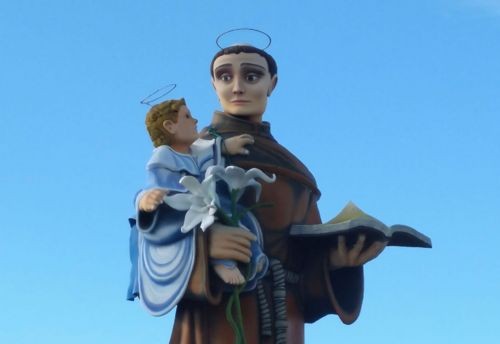
The Popular Saints festivities, as they are known today, are the result of a process of historical reinterpretation that combines ancient festive practices with later religious and political frameworks. In Lisbon, these celebrations were long associated with specific places within the city, most notably Praça da Figueira, which served as the main hub of the festivities and was characterised by a spontaneous, nocturnal, and distinctly popular atmosphere. Only later were these practices gradually reorganised, relocated, and incorporated into broader official programmes, losing part of their informal and communal character.
At the same time, this reinterpretation has a clearly political dimension. The triptych was written in 1935, at a time when the Estado Novo was seeking to appropriate popular festivities, incorporating them into the so-called Festas de Lisboa and linking them to a broader nationalist and religious agenda.
In the triptych Praça da Figueira, Fernando Pessoa intervenes directly in this process by offering a critical reading of the festivities. Rather than accepting the religious and institutional version of the saints, the poet emphasises their pagan, Dionysian, and popular character, returning them to the sphere of lived experience: dance, wine, song, the body, and the street. As José Barreto points out in an article published in issue 13 of Pessoa Plural, the journal of the Faculty of Arts and Humanities of the University of Lisbon, Pessoa deliberately contrasts the official saint, constructed by the Church, with the saint imagined by the people, affirming that “you are what we imagine you to be”; that is, a figure shaped by collective practice rather than by doctrine.
Excluindo as imagens criadas pelo autor deste blog, as imagens utilizadas neste post têm as seguintes lincenças:
Santo António (Estátua em Gouveia): by Valentim0106, CC BY-SA 4.0 <https://creativecommons.org/licenses/by-sa/4.0>, via Wikimedia Commons https://commons.wikimedia.org/wiki/File:Est%C3%A1tua_de_Santo_Ant%C3%B4nio_em_Gouveia.png


Termos e Condições