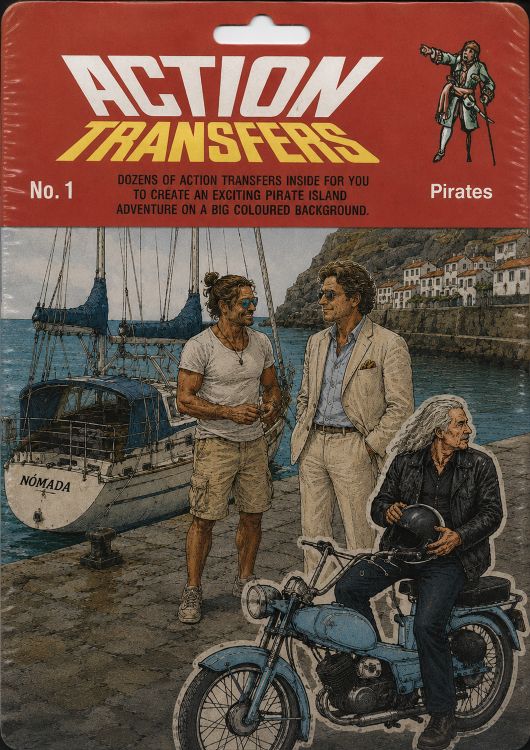
This time, preparations for departure proceeded at a leisurely pace, free from the pressure of tides or arrival deadlines. That did not mean, however, that the Captain spent the morning snoring in his bunk. He was up with the sunrise, putting the final touches on arrangements that had already begun several days earlier. And rightly so, a North Atlantic crossing, possibly lasting fifteen days or more, with five people aboard, required planning down to the smallest detail.
By the time I reached the harbour, most of the work had already been done, and I only helped complete the final tasks. Afterwards, we went to the Metralhas for what would be our last lunch ashore for several weeks and reviewed the inventory one final time: equipment, stores, provisions and supplies. We returned briefly to our lodgings for one last shower free of rolling decks, a change of clothes and the collection of the remaining personal belongings. On our walk back to the harbour, I could not resist asking about the political advisers we were supposedly going to endure on the high seas.
“They are three controversial figures, each aboard for very different reasons,” said the Captain. He did not elaborate.
When we reached the quay, the first of the new crew was arriving as well.
“British punctuality,” murmured the Captain with a smile.
I watched him approach the Nomad with a firm and elegant stride, a dark leather case in one hand and a book in the other, presumably the preferred entertainment of a man who would rather arrive early and wait than risk arriving late.
He moved elegantly in no hurry. He wore a white linen blazer and sand-coloured trousers, leather deck shoes, a pale blue shirt fastened with mother-of-pearl buttons and a pocket square that seemed deliberately chosen to reflect the golden light of Venice. He had a perfectly combed light-brown hair, the sort of mild British tan acquired lying on grass rather than beaches, and round sunglasses with thin frames resting upon a nose that appeared to have been sculpted by a seventeenth-century Italian master, aristocratic without being vain.
The Captain leaned towards me.
“Johnny Locke,” he whispered conspiratorially. “Met Huygens at a retreat on artificial altered states of consciousness in Goa.”
Of course, I thought. The smile that crossed my face did not escape him.
“He’s an academic specialising in perception, though he eventually drifted into the business of neuromarketing. These days he divides his time between TED talks and consultancy work on cognitive strategies for governments.”
I responded with a cautious “I see…” without taking my eyes off that nose, which seemed expressly designed for leading discussions in large auditoriums.
Even at a distance, one could tell he was the sort of man who entered a room and caused mirrors to straighten themselves.
Locke stepped aboard with the elegance of a man who had learned to sail on wooden yachts. He shook hands with the Captain, then with me, offering a polished smile.
“The Nomad… more spacious than I was led to believe. And with an excellent sense of rope management.”
We had barely exchanged our first pleasantries when a cheerful shout echoed across the harbour.
“Ahoy there!”
Another crew member was approaching: a tall man waving from afar, his stride loose and springy, a canvas duffel slung over one shoulder and a lightweight backpack resting comfortably on his back. Unlike Locke, he looked as though he had been plucked directly from a beach by one of those amusement-arcade claw machines and deposited on the quay at Corvo. He had a deep tan, long hair gathered into an improvised bun, khaki shorts, a fitted white T-shirt, sun-bleached trainers dusty from travel and mirrored sunglasses. As he drew nearer, one gained the impression that he might equally have been arriving from an expedition across the Andes or from a summer music festival in Montreux.
“Jay Jay Russo,” announced the Captain with a half-smile. “Had his musical phase in the nineties. Legend has it he wrote that ballad no one couldn’t escape during the summer of Expo ’98. Later reinvented himself as a ski instructor for wealthy ladies attending spiritual retreats in the Alps.”
The Captain paused.
“A genuine postmodern dandy, gifted both at seducing people and disappearing at precisely the right moment. These days he runs workshops with titles like Body, Freedom and Velocity or The Poetics of the Leap.”
Russo approached with the easy familiarity of someone who already belonged aboard. He dropped his bag onto the pontoon with a sweeping gesture and waved cheerfully. After greeting the Captain with a fist bump, he turned to me with one of those broad, infectious smiles that are remarkably difficult to resist.
“Jay Jay Russo. A pleasure.” Then, without waiting for any question, he added. “The trip was pleasant enough, apart from a group of teenagers on the ferry who mistook me for a Scandinavian DJ. I didn’t have the heart to correct them.”
He laughed. It was easy to like him.
Equally easy to imagine that, given enough time, such relentless sunshine might become slightly exhausting. He carried himself like a man perpetually on the verge of proposing a swim, a radical idea, or a detox juice.
At that moment Johnny Locke emerged from below deck with characteristic elegance. The two men looked briefly surprised and exchanged a short but genuine embrace.
“Still training millionaires in St. Moritz?” Locke asked, amused.
“I gave that up,” replied Russo. “Nowadays I only take clients who make me laugh.”
He glanced around.
“Are we all here? Was I the last to arrive?”
“Only one missing,” said the Captain. “Hobbes.”
“Bad Tom? He’s still alive?”
“More alive than ever,” said Locke, pointing towards the harbour entrance. “There he comes.”
“You must be joking.”
A metallic whine began to grow in the distance, something halfway between an overworked sewing machine and a power drill struggling against stubborn masonry. From the harbour entrance came a pale blue moped. An old fifty-cc machine, the sort with a broad seat and chrome exhaust, ridden with unexpected gravity by a motorcyclist dressed entirely in black who looked as though he was an action transfer figure that had been accidentally detached from the Harley-Davidson to which he properly belonged.
The tiny vehicle reached the end of the quay with one final heroic sputter and came to a halt beside the Nomad as though it had crossed half of Europe rather than a modest stretch of municipal road scented with dried fish and gentle inclines. The rider dismounted with the solemnity of a man arriving at a funeral. Possibly his own, such was the slowness of his movements.
He wore a black leather jacket, frayed at the cuffs, with a flaming skull embroidered across the back and the word Leviathan stitched beneath it in Gothic lettering; faded jeans; a dark full-face helmet covered in worn stickers, on one side, an anarchist “A” crossed out by a red prohibition sign, on the other a capital letter sticker stating “NO STATE, NO PEACE”.
A metallic whine began to grow in the distance, something midway between an overworked sewing machine and a power drill struggling against stubborn masonry. From the direction of the harbour entrance came a pale-blue moped, an old fifty-cc machine with a broad saddle and a chrome exhaust, ridden with improbable gravity by a motorcyclist dressed entirely in black who looked as he was an action transfer figure that had been accidentally detached from the Harley-Davidson to which he properly belonged. The little machine reached the end of the pontoon with one final heroic sputter and came to a halt beside the Nomad as though it had crossed half of Europe rather than a modest stretch of municipal road lined with gentle inclines.
The rider dismounted with the solemnity of a man arriving at a funeral, perhaps his own, such was the slowness of his movements. He wore a black leather jacket, frayed at the cuffs, with a flaming skull embroidered across the back and the word Leviathan stitched beneath it in Gothic lettering; faded jeans; a dark full-face helmet covered in weathered stickers, an anarchist A crossed out by a red prohibition sign on one side and the slogan No State, No Peace on the other. He carried himself with the bearing of a veteran of long roads and bad weather, a bearing that looked entirely misplaced atop such a diminutive machine.
The Captain leaned towards me.
“Tom Hobbes. Essayist, motorcyclist and professional pessimist. Some call him a political philosopher; others, a prophet of disaster. He spent years riding across Europe on a motorcycle, collecting stories of wars, financial collapses, political crises and even romantic disappointments, all to prove a thesis he had already decided was true before he ever set out.”
“And what is the thesis?”
“That human beings are a species of badly resolved accident.”
He removed the helmet with the ritual deliberation of a medieval knight, revealing a severe face framed by greying hair that fell onto his shoulders while beginning to retreat at the crown, a beard marked by two days of neglect, knitted brows, and the eyes of a man who had read too much and slept too little. He looked around as though he had suddenly regained his sight.
“Tom!”
Russo sprang lightly onto the pontoon and advanced with open arms and a broad smile.
“Still working on that essay where hope dies in a campsite in Slovenia?”
“I revised it,” replied Tom impassively. “Montenegro now. Darker. More symbolic.”
They laughed and embraced like old accomplices. Aboard the Nomad, with his hands buried in his pockets, Johnny Locke merely inclined his head, as though silently assessing the degree of madness that was coming aboard.
“Johnny,” said Tom.
“Tom,” replied the other.
“And the moped?” I asked.
Hobbes looked at me as though he had only just become aware of my existence.
“Borrowed it from a local fisherman,” he said, loosening the backpack that had been lashed precariously to the rear of the seat. “I traded half a bottle of homemade grappa and a handwritten essay on the collapse of institutional trust in archipelagos.”
Then he laughed at his own joke.
He was already placing a foot on the deck when the Captain raised an arm with abrupt finality.
“No boots and no high heels aboard the Nomad. Sailing boats and heavy soles are a poor combination.”
Tom stood motionless for a moment. Then a tired but genuine smile crossed his face and he sat down on the pontoon to remove his boots, doing so with the deliberation of a ritual, first one, then the other, revealing thick grey-striped socks with a hole already beginning to emerge at one of the heels.
While the guests carried their assorted possessions below deck and resumed conversations interrupted by distance and time, the Captain and I busied ourselves with the final preparations for departure.
“The cast is complete,” he said under his breath, watching the three newcomers. “And what a cast. All of them were political pioneers whose ideas have influenced some of the most important decision-makers in history, nothing like those stains of intellectual pollution we call political commentators on television. Three distinct thinkers – distinct in every sense of the word, since one is a realist, another a reformer and the last an idealist – and all of them confined to the same floating cage. It could lead to an epiphany.”
“Or a shipwreck.”, I suggested.
And it did not take long for the first explosion. No sooner had sphincters and hearts relaxed after the adventurous departure from Porto da Casa – you’ll have to watch the video I sent you; there are times when Porto da Casa feels anything but domestic – than the first drums of discord began to sound.
“Everything is mechanical and causal; for every effect there is a cause. The principles of the natural sciences must be applied to the science of man and society. The material world is reality. Sensations generate ideas; they do not come skipping down from the Alps behind Mary Poppins singing in yodels.”
Bad Tom’s voice was already beginning to reveal a measure of impatience. From a passing comment about the character of the Corvo islanders, the conversation had somehow escalated into a potentially lethal debate about human nature.
“Says the man on the moped,” Russo replied mockingly. “You sound like one of those American television writers who thinks everybody is secretly wicked.”
“Motorcycles explain more than you think. The balance of a motorcycle depends upon movement, and what drives those who ride them are desire and passion, guided by the pursuit of pleasure and the avoidance of pain. That is how all of us live our lives. Like the true motorcyclist, in our natural condition, without law or political organisation, we are individualists and derive little genuine pleasure from the company of others. On the contrary, we live in discord and compete for goods, security and reputation. In the state of nature, man lives in constant fear of violent death. And that fear becomes the strongest of emotions. Without political authority, the life of man is solitary…”
“Solitary, poor, nasty, brutish and short,” the other two completed in chorus.
“We know the advertisement,” added Locke with a laugh.
“If you know it, then you understand why a strong authority is necessary to prevent man from becoming a child of anarchy.”
“There seems to be no shortage of children of anarchy these days,” Russo observed.
Tom’s voice lowered slightly, as though the conversation itself were descending into more tragic territory.
“During my travels across Europe, I heard firsthand, in Greece, Thucydides’ account of the fratricidal wars suffered by the locals, and I assure you there is nobody who would willingly choose such an experience.”
With a gesture of weary resignation, he took one final drag on his cigarette and was preparing to flick the butt overboard.
“No, no, no,” interrupted the Captain immediately. “The cigarette goes into the ash tin. Life may well be solitary, poor, nasty, brutish and short, but out here on the ocean it is certainly not polluting.”
“I don’t usually…”
“Of course you don’t,” the Captain replied.
“It is moments like these, Tom, that reveal how different your nature fortunately is from the one you spend your time describing”, observed Russo, giving his companion’s knee a gentle pat. “The natural state of man is communion with nature, and one can see it perfectly well in children. Our nature is benign. We are guided by amour de soi, the instinct of self-preservation, and by pitié, that instinctive compassion and revulsion before suffering, not merely our own suffering but that of other creatures as well.”
“That isn’t quite what you said about the little tyrants of Chambéry and Lyon, whom you wished to throw benevolently from a rooftop,” Locke interjected.
“We can discuss the education of children another time, Johnny, and I have a great deal to say about your own ideas. But we are talking about human nature, and about the way society corrupts it. That, my dear friends, is the real problem, because the competition for goods and honour of which Tom speaks is itself a corruption introduced into human nature by society. Only outside the natural condition does man begin measuring his needs against those of other men. Private property and human social organisation are not natural, however much people insist upon pretending otherwise.”
“Here comes the revolutionary sermon,” sighed Locke, provoking Russo to stiffen visibly.
“My friend, don’t pull that saintly expression, especially when your own name was invoked in a revolution that changed the geopolitical shape of the modern world. We can discuss private property later, but there is one thing society unquestionably accomplished: it transformed the benign instinct of self-preservation into vanity, into amour-propre, that obsessive need to be more than everyone else.”
“Oh, come now. Don’t be so dramatic.”
The veins in Russo’s neck had begun to appear.
“Dramatic? Have you looked at social media recently? It’s all superficial and scarcely truthful. Facebook might as well be called Fakebook. The moment you enter social media, you step into a swamp of vanities that reveals just how debased we have become, while never daring, amidst so much philosophy, benevolence, delicacy and such sublime codes of morality, to confront the fact that we have nothing to show except a frivolous and deceptive appearance, honour without virtue, reason without wisdom, pleasure without happiness!”
I found myself astonished by the length of a sentence delivered in a single breath. The transformation in Russo’s mood was visible throughout his face and posture. Nobody said anything for a moment, perhaps hoping the winds would ease and the storm pass of its own accord.
Locke stretched out an arm towards a bottle of some local spirit, took a swallow and passed it to Russo.
“I honestly don’t know how either of you manages to sleep with these ideas. I’d feel either terrified or furious enough to develop chronic insomnia. I don’t wish to launch a full counter-argument, but a state of nature grounded in reason and sustained by human cooperation strikes me as rather closer to reality.”
“A gentlemen’s club,” scoffed Bad Tom after a long gulp.
“The trouble with both of you is that you always assume the solitary man lives alone. I have never met such a man. I have met fishermen, merchants, farmers and craftsmen. All of them make agreements, keep promises, exchange goods and recognise mutual rights long before a State appears to tell them how to behave. Reason teaches them that, being all free and independent, no one ought to harm another in his life, his liberty, or the fruits of his labour.”
Tom fell silent, as though searching inwardly for his brain, while Russo seemed intent on turning the grogue into the private property of his stomach.
“And what exactly is supposed to be funny about that?” asked Tom, struggling to suppress a belch.
“The funny part is that both of you have spent half your lives imagining men you have never actually met,” Locke replied calmly. “You imagine a man so selfish that he requires a State to stop him from murdering his neighbour. Russo imagines a man so pure that only society could possibly corrupt him. I look at the world and see people who are considerably less interesting.”
Russo placed a hand dramatically upon his chest.
“Less interesting?”
“Indeed. Fishermen worried about the next tide. Merchants worried about the next shipment. Farmers worried about the next harvest. People who make agreements, keep promises and solve problems without feeling compelled to turn every disagreement into a theory about the destiny of mankind.”
“What a depressing vision,” sighed Russo.
“On the contrary. I find it rather comforting.”
Tom shook his head.
“Until the day they run out of food.”
“Until the day a philosopher arrives,” Russo countered.
The two burst out laughing. Locke confiscated the bottle from their hands and took another swallow.
“You see? You cannot even agree on the origin of the problem.”
“The origin of problems is always other people,” declared Tom.
“No. The origin of problems is private property,” corrected Russo.
“The origin of problems is philosophers placing too much confidence in their own theories,” concluded Locke.
For a moment they sat in silence, looking at one another.
“Was that directed at us?” asked Russo.
“Naturally.”
“Then it includes you as well.”
“Naturally.”
Locke took another drink. Tom let out an unexpected laugh, which quickly infected the other two. It was enough for the conversation to abandon philosophy altogether. Instead of going for one another’s throats, they went for the neck of the bottle and wandered into other territories: old loves, failed revolutions, songs from the nineteen-nineties, the quality of Portuguese grogue, the decline of universities, and the possible existence of mermaids in the North Atlantic. From that point onward, logic sank rather quickly.
As I write these lines, they are singing – or croaking, shouting and bellowing – and it cannot be long before they begin regurgitating. They are about to provide the most direct demonstration imaginable of the explosive combination of alcohol and the motion of a sailing boat.
Fortunately, the sea is somewhat calmer tonight, which makes it considerably easier to lean over the side without falling overboard or soiling the deck.
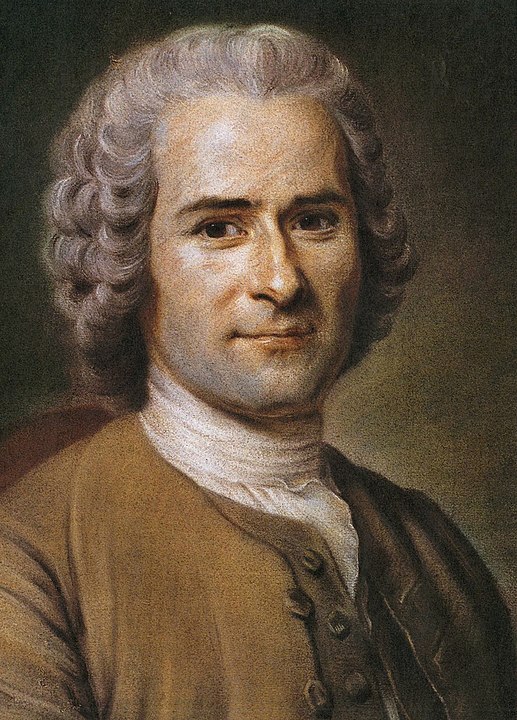
J. J. Russo
A fervent Swiss man, an uncompromising defender of his native Geneva. A man of great passions, laid bare in his autobiographies, he seems always to live at one of two extremes, between love and hatred.
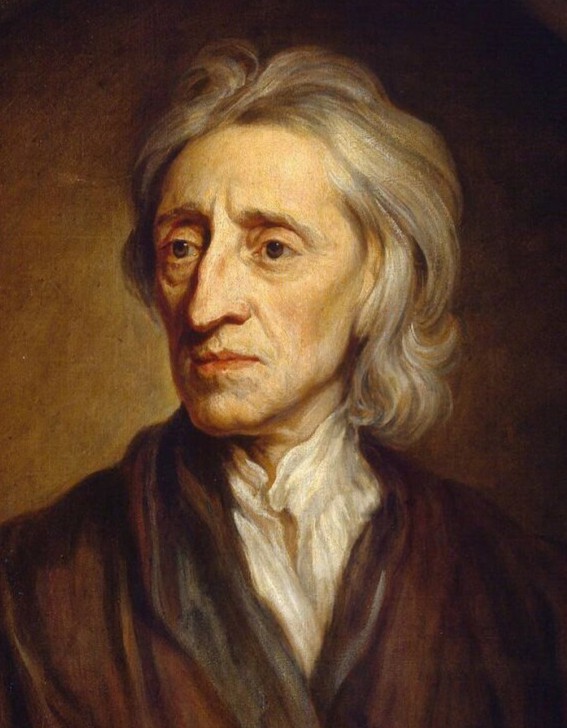
Johnny Locke
The very embodiment of the elegance and perceptiveness of an English gentleman, armed with a corrosive wit. Long before becoming a political guru of considerable success in the United States, Johnny Locke had distinguished himself in the realm of scientific thought.
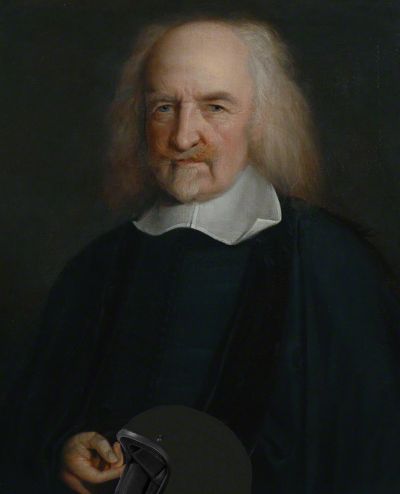
Bad Tom Hobbes
Once the grogue begins its work, he relaxes to the point of recounting stories such as his premature birth, supposedly triggered by the fright his mother received when thousands of Barcelona supporters turned parts of England upside down during a European Cup Final. Sober, he is another man entirely: cautious, defensive, and occasionally so convinced of his own judgement that he borders on arrogance.
Excluindo as imagens criadas pelo autor deste blog, as imagens utilizadas neste post têm as seguintes lincenças:
J. J. Rousseau: https://commons.wikimedia.org/wiki/File:Jean-Jacques_Rousseau_(painted_portrait).jpg
John Locke: https://commons.wikimedia.org/wiki/File:John_Locke.jpg
Thomas Hobbes: https://commons.wikimedia.org/wiki/File:Thomas_Hobbes_by_John_Michael_Wright_(2).jpg


.jpg)

.jpg)
Termos e Condições