
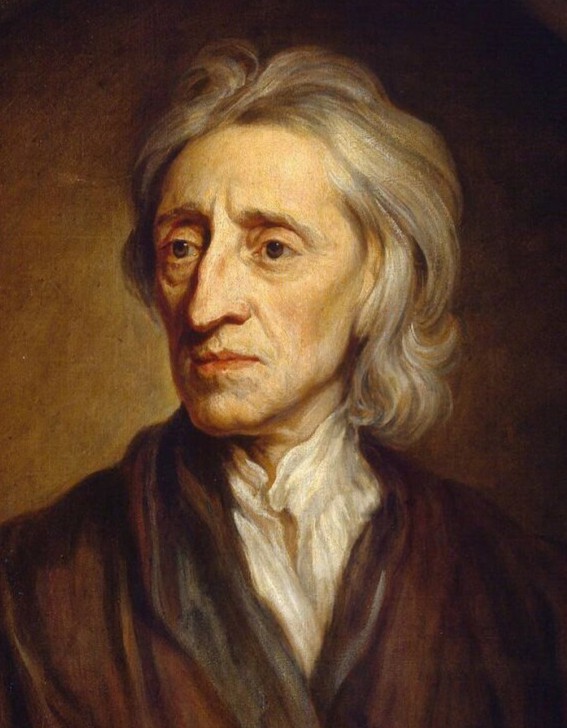
The very embodiment of the elegance and perceptiveness of an English gentleman, armed with a corrosive sense of humour. Long before becoming a highly successful political guru in the United States, Johnny Locky had already distinguished himself in the field of scientific thought, helping to consolidate the empirical approach through pragmatic reflections on the limits of human knowledge: “we know nothing about fast food until we put a piece of that industrially marketed substance into our mouths.”
John Locke was one of the leading thinkers of liberalism and a central figure of the Enlightenment. Unlike Hobbes, he defended a more optimistic view of human nature, maintaining that individuals possess inalienable natural rights, including life, liberty and property. In his Second Treatise of Government, he argued that political power exists to protect those rights rather than to restrict them arbitrarily.
Locke also developed a theory of the social contract, but one that placed particular emphasis on limiting the power of the State and securing the consent of the governed. He maintained that whenever a government violates fundamental rights, the people retain a right of resistance and even of revolution. His ideas exerted a profound influence on modern democracies, inspiring documents such as the American Declaration of Independence and helping to establish enduring principles of individual liberty and representative government.
Excluindo as imagens criadas pelo autor deste blog, as imagens utilizadas neste post têm as seguintes lincenças:
John Locke: https://commons.wikimedia.org/wiki/File:John_Locke.jpg


Termos e Condições