A week of rest in Santa Maria was enough to restore our energy after the transatlantic adventure between Sagres and Vila do Porto. So much so that the voyage to Faial feels like a genuine weekend outing, with a gentle five-knot breeze offshore. The conditions are ideal for everyone on board to relax and chat.
When I say everyone on board, I mean myself, the captain, and one additional crew member; but he is a character worth several people at once, and his peculiar way of organising speech requires as much effort to follow as trying to understand two or three people speaking simultaneously.
His name is Jules Verlin, “intrepid explorer and journalist for Voyages Extraordinaires magazine.” As an explorer, however, he suffers terribly from seasickness, and as for his journalistic talents, I can only hope that his articles possess a more coherent structure and a clearer logical cohesion. He has not managed to produce a single sentence in the normal order of words.
“San Michelle, of my boat the name this is, with two masts a sailing vessel that long enough gaze upon one enjoys.”
“And is that where you write all your articles?”
“Oui.”
“And you don’t get seasick?” asked the captain, his tone thick with disbelief.
“Eh bien, it is that on land the boat stays. Not moved by the waves it is.”
“Doesn’t move with the waves, hm? Is it stuck?”
“Bon, a harsh word stuck is. Je prefer with the land communed.”
“I’ve never heard that one, ‘communed’, but I’ll pass it on to Beirão next time he tells us how he became ‘communed’ with the sandbanks of the Sado River.”
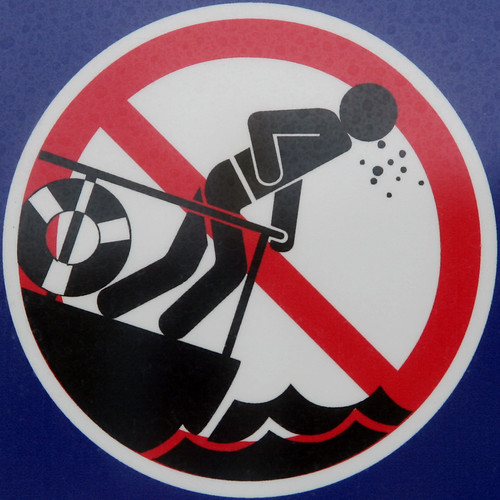
Lucky man, having an immobile boat. Since we left the coast of Santa Maria, Verlin has vomited over the side three times. He appears highly practised, because whenever he rose from another plunge into nausea, there was not the slightest trace of the catastrophe left in his beard.
“Aboard a submarine lived I the most difficult of all report, over twenty thousand leagues into a bucket vomiting.”
“Really? I’d love to hear the story of that twenty-thousand-league report. What submarine was it aboard, exactly?”
“Le Nautilus Deux. In the shape of a giant cigar, black painted, with round portholes fish eyes like. A machine magnificent, by mixed energy propelled, solar and algae biodiesel.”
“A respectable name. But twenty thousand leagues? Isn’t that a little… exaggerated?”
“Ah, mon capitaine, literal not is the measure; of the vastness travelled it is a symbol. For downward to descend longer is than forward to go, when the bottom one seeks of the world.”
“And did you find the bottom of the world?” asked the captain, raising an eyebrow and making no effort to conceal his scepticism.
“To find, oui. In the Philippine Sea a fissure we saw that could to Hell itself lead. Black the fish were, transparent others, teeth had they and light of their own as well. One of them to me spoke, I believe, in the dreams that brought fever.”
“Was that before or after vomiting into the bucket?”
“During. Simultaneous it was. Of body and soul choreography. But great the discovery: a giant octopus saw we, with the size eyes of dinner plates. It attacked not, but us followed. Three days and three nights, like a dog faithful. Or a tax collector.”
We laughed.
“And you documented all this, I presume?”
“Filmed I did, wrote I did, drew I did. But the hard drive damaged became from a leak radiation. The ink, by the pressure dissolved. The drawings, an octopus stole during a distraction moment. But memory… memory lost is not.”
“Convenient,” muttered the captain, giving me a sidelong glance. “And how did the expedition end?”
“To end? Non, non, ended it never did. Afterwards, the world around went we in eighty days. A wager between gentlemen.”
“And was that trip around the world really completed in eighty days? Or is that also… symbolic?” asked the captain, pursuing the subject like a man fishing in deep waters.
“Ah, non, exact eighty days they were. With to spare three hours. In Lisbon began it, aboard a tram. For with a metallic zigzag all journeys great begin, between hills and birds.”
“Lisbon? But shouldn’t it have been London? I’m thinking of Greenwich.”
“Oui, oui, conventions… But in London raining it was. And the promotional ticket from Lisbon to Ceuta was. After that, by dromedary Morocco through, by tuk-tuk in Nigeria, and upon an ostrich rented in Namibia. Fast was she, but stubborn also. Only south would run she.”
“An ostrich?” We laughed heartily. “Now that’s a new one,” said the captain.
“Little comfort there was, but was proud she. Phew Phew Bota was she called. In Durban, aboard a ship cargo to Goa we went. In India, a disguise cow we bought so that see us nobody would, but a spotted Swiss cow disguise it was, and captured for human sacrifice we were. A fakir saved us, barefoot prayers across we walked unseen. However, in Kazakhstan briefly detained once again we were under suspicion of espionage.”
“And how did you get out of that one?”
“With charm and a deck of cards. As an illusionist worked I for two days at a local wedding. The bride with the driver ran away and their lift we appropriated. All across China we travelled as extras in a historical film, and in Shanghai a catamaran ecological we boarded for Easter Island. With a moai we spoke, using an intuitive translator of crystals and straw. A blessing received I, ancestral in nature. A necklace also, shining it was, yes, and it glows whenever I lie.”
“That isn’t glowing now, is it?”
Both of them burst out laughing.
“In rest mode it is. Afterwards, Colombia. Hitchhiking with coffee traffickers, the jungle through we crossed upon philosophical donkeys, to Venezuela all the way. A taxi to the coast we took and then to Cuba a boat. By taxi To Havana we travelled once more. Curiously, the same driver, the same moustache…” he said, as though only at that moment he had noticed the detail. “And finally, Bermuda.”
“Bermuda? Wow!…”
“Ah, Bermuda… our final leap. Through the Triangle to cross we wished, but… something, hum, strange happened. The compasses danced. Liquid the sky became. And in the middle of Terreiro do Paço station in Lisbon we appeared, standing upright. A small moai with us there was. Why, nobody knows. And the wager won we did! The following day, aboard the tram I was. The driver recognised me and said, ‘You’ve been missing.’ And I replied, ‘A little trip I went on.’”
“Ah, but wasn’t the record beaten by an American woman?” I asked.
“Ah, oui, mais… the first I was. And the first also I was across the skies of five countries in a balloon voyage. And into the bowels of the volcano of Galipoli, in its exploration, a pioneer I was as well.”
Then he sighed.
“Ah, vraiment, mes amis chers, the adventure greatest is that of my friend American Arthur Gordon Pym. What endured he in two reports was recounted, one by my friend edited Edgar Allan Peux and published another in my own magazine. C’était extraordinaire!”
And more adventures will surely be told to us. Ahead of us, more one day have we, as Verlin would say.
The captain drew him aside to ask whether he knew a certain number of captains. From a distance I heard the name Ateras or Atarax or something that sounded suspiciously like a medication. I left them to their conversation and came below to catch up on my writing.
Fortunately, the voyage is short and, according to the captain, by the day after tomorrow we shall already be in Horta. Just as well. I am not in the mood for any great crossings, at least not for now.
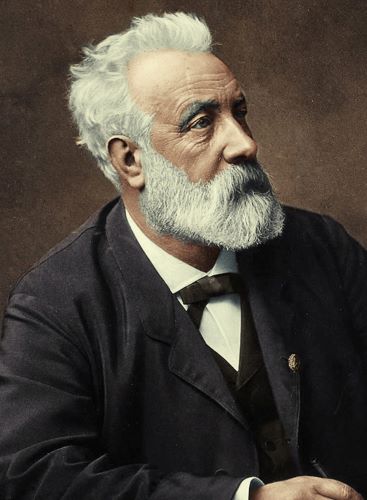
Jules Verlan
An adventurer eager to become a sailor, but burdened with a stomach far too sensitive to the motion of the sea.

Are you underingstand?
Criminal groups and young people have often developed sociolects to conceal from other speakers what is being communicated. One of the most famous examples is Verlan, a form of French slang that reverses the syllables of words to create coded expressions.
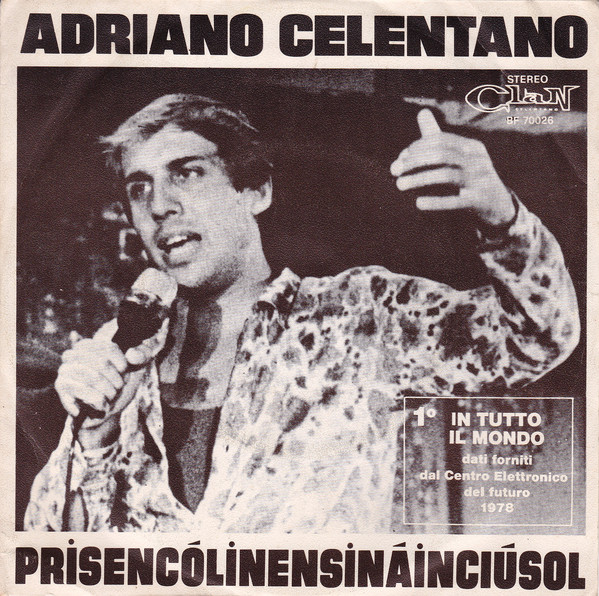
Prisencolinensinainciusol
The song created by Adriano Celentano to imitate American rock and demonstrate how the English language sounds to those who do not speak it has inspired countless “translations” over the years.
Excluindo as imagens criadas pelo autor deste blog, as imagens utilizadas neste post têm as seguintes lincenças:
Imagem do post: by Leo Reynolds https://www.flickr.com/photos/lwr/146786485/
Jules Vernes: https://commons.wikimedia.org/wiki/File:Jules_Verne,_1892_(colored_portrait).jpg
Tás a Ceberper: by Surprising Media https://pixabay.com/es/photos/muchachas-joven-los-telefonos-5571759/
Adriano Celentano: https://1win1.it/t381p75-adriano-celentano-discografia-cover-video-testi


.jpg)
Termos e Condições