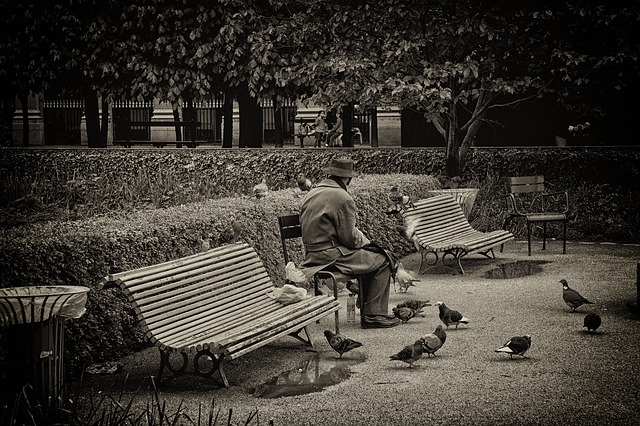
I’ve just got home after meeting Silva. It was as if I had returned to the crime scene. He was waiting for me at Adega dos Frades, on the ground floor of the same building of the boarding house.
Doesn’t it ever feel when you go somewhere familiar as you’re returning to a dream, filled with memories gathered like dust that escapes the cleaning cloth? That’s the strange sensation I feel every time I go to the Adega.
The Adega remains a place where time moves slowly. It lingers at one table over a drink, at another over the news, further along delaying itself in a game of cards, postponing departure for yet another glass and another story. The walls stand guard over photographic memories –customers from other eras lined up in toasting poses, the neighbourhood in festive processions during the Santos Populares festivities, a few pennants and their respective amateur football teams.
At the counter, Manel dos Frades was serving drinks and food with a skill honed by habit, the same easy smile… though his belly is fuller than the night before. Above him, the same old sign he always refused to correct: “Drinks on display are for house consumption.” It was no use telling him that, with that preposition, the drinks in those bottles would hardly make him any profit.
It was, in fact, as the saying goes, I returned to the scene of the crime – not merely a physical place, but a fragment of my own history, steeped in memories.
“Do you want something to eat? I’ve ordered a bifana and a traçadinho for myself,” Silva said as I arrived. He was sitting at our usual table by the wall of worn tiles, his walking stick resting against the wooden tabletop.
“No, thanks.” I hesitated, searching for the most polite explanation. “I’m cutting down on meat.”
He gave a faint smile. “I understand. Good for you. It’s probably not too late for me to do the same, but I’ve no desire to fight old habits at this stage of my life.”
I’d struggled with that myself. The smell of the bifanas in the air stirred past pleasures and awakened my appetite. Even so, without trying to suppress or deny those memories, I could now distinguish in that aroma the greasy traces of ingredients harmful to human health and to the planet’s wellbeing – and, above all, the unnecessary suffering of animals. Eating had ceased to be a simple instinct; it had become a political act.
“Here you go, Silva.” It was Manel dos Frades. He set the plate and glass down on the table and turned to me. “I thought it was you, I recognised you from behind. How have you been?”
I expected him to say something about the previous night, but it was as though our encounter had never happened. He looked at me for a few moments with his usual awkward smile – back in our childhood, Manel had insisted on “winning” my attention – and I replied with a shrug.
“So, what’ll it be for you? Want me to make you a tofu sandwich, friars’ style?” Since he’d added vegan dishes to the menu, he was always joking about the culinary anachronism.
“That’ll do, but no traçadinho, just sparkling water.”
“Ha! I can tell by your face you had quite a night.”
I studied him closely, trying to see if he would give anything away.
“Alright, alright, no need to look at me like that, no one’s here to judge,” he softened, with a nervous laugh, returning to the counter to prepare my food.
“So then, answer me: how have you been?” Silva asked.
On instinct, I went on the defensive, explaining how tired I’d been and how lost I’d felt in recent months, without direction, more stranded than adrift.
“Good Lord, that sounds like the chorus of some fisherman’s fado! If you’re going to use nautical metaphors, you should know you might be stranded because of the tide. When the tide turns, you’ll float free, girl.”
“It’s not that simple. Most likely, once the tide changes, I’ll run aground on a reef straight afterwards.”
“Ah! The shoals. We’re still speaking metaphorically, aren’t we?”
“I don’t know. I feel a lack of meaning, that’s all. And when I look in the mirror, I don’t recognise myself. Nothing I do feels real, it’s as though I’ve lost touch with my true identity.”
“You’ve been reading too much rubbish on the internet. Before long, you’ll be parroting that everyone must discover their ‘true self’ and express it in their own unique way. In my day, self-help books aimed to turn us into something different from what we were. ‘Be more sociable’, ‘Think positively’. Now these so-called life coaches sell the illusion that there’s some hidden essence inside us, buried by a wicked society. And that once we rediscover it, we’ll become more authentic.”
I felt movement behind me. Manel returned with my plate. We paused the conversation and set about eating.
“Ah! Now this is happiness, isn’t it?” Silva sighed, taking a bite.
Seated opposite each other, leaning over chipped enamel plates, we looked like silent conspirators sharing a secret. Silva, with the solemnity of a priest, chewed with almost ceremonial slowness.
“It’s the dental plate, makes everything more difficult,” he explained with a brief laugh.
Once we’d eaten, we turned to the events of the previous night. I told Silva the same story I’d told you, perhaps with more animated gestures and, at times, emotions closer to the surface. He listened patiently, interrupting only to confirm any odd detail.
At the end, he looked out the window, pointing to a shopfront across the street, white curtains, torn and grimy, and a red sign stuck to the glass in bold, cheerfully crude lettering: For Lease.
“So, that’s where you got the tattoo?” he asked.
I nodded, not daring to speak, afraid that any word might trigger another unsettling occurrence.
He studied me, weighing my expression, his good eye calm with the damp serenity of old age, the blind blue one turned inward in constant introspection. You know what he’s like, with those long pauses, as though he were excavating meaning from the most ordinary words. Then he smiled and said:
“I think I know what’s going on with you. Best we talk while we walk, in the manner of Socrates.”
That meant the conversation would be long.
We strode through downtown Setúbal, Silva laying out different perspectives on the notions of identity and the self. I’ll tell you the details another time. We ended our peripatetic stroll in front of the Luísa Todi theatre, seated on a garden bench, Silva holding his walking stick between his hands.
“The analogy of the Self as a narrative is, in my view, the most satisfying of the various definitions. It cuts across so many fields of thought. We construct meaning through narratives, explaining the world by way of stories, and the same process is used to create identities. I’m referring to the personal dimension of the individual narrative each of us builds about our own life, in which we are simultaneously the narrators and the material being narrated, giving our existence cohesion and coherence.
We are creatures in space and time, and the present is experienced not as true time, but as the context of action where past and future intersect. And that action, my dear, when you look at the stage of life, like that theatre in front of us, takes place within a cultural setting and interweaves with the narratives of other actors. Our Self is not hidden inside us waiting to be rescued; it exists in the story we tell about our past and in what we attempt to do with our future.”
He watched me to see if I would say anything. I admit I was somewhat dazed by the reflection, but I indicated that I had understood the metaphor.
“It’s more than a metaphor,” he clarified. “I suspect that, without realising it, your identity crisis has intensified to the point of creating a singularity within the narrative plane. Nothing dramatic, just a slight inclination, but enough for you to begin intersecting with narrative planes from different parallelities. Contrary to what is commonly believed, narratives are not linear. They resemble geometric sequences with varied configurations, from circular to icosahedral and more complex forms, all layered vertically.
To explain in more detail, each geometric configuration corresponds to a particular configuration of an individual’s personal narrative, which overlays another configuration, and another, each grounded in successive parallelities, alternating like stroboscopic lights.
The parallelities in which narrative planes may occur extend infinitely, parallel to one another, and correspond, in a sense, to the concept of space, while the stroboscopic lights mark cadences that, if you like, translate our concept of time. Keep in mind that there is a subtle difference between cadences and sequences. In cadence, you have the freedom to read narratives vertically, upwards and downwards. The cadence is so rapid that it creates a sense of continuity across narrative planes. Just like in the films.
Now, perhaps more difficult to explain, narrative planes are abstractions, and each corresponds to the set of all narrative configurations that could potentially occur within a given parallelity. For that reason, the narrative plane merges with the parallelity, although they are distinct. Since narrative planes are abstractions – planes in potential – they never truly occur, or at least never in their entirety. Their material expression is the narrative configuration, which takes place at a specific point within the parallelity.
Configurations may occur at any point along a parallelity, which means that, potentially, the possibilities for personal narrative configurations are infinite. However, since all these configurations are enduring and interconnected, influencing one another, there are natural constraints in the nexus between them. In other words, different narrative sequences can not zig and zag nor stretch too much and must be articulated between configurations.”
I nodded mechanically, more to show I was paying attention. I couldn’t truly understand what he was trying to explain.
“The best metaphor I know – and the most delicious – is that of a mille-feuille. Each layer is a parallelity, and the configuration of personal narrative is the cream between them. When you take a bite of a mille-feuille, it isn’t only the cream in the layer your mouth touches that is affected. All the cream in the other layers, that is, all the configurations of personal narrative across the different parallelities shifts. Sometimes, the whole narrative spills out!” he laughed, with a gleeful expression that reminded me of that old Boca-Doce advert.
“When there is a narrative act – some call it narrative verticalisation – and a narrative configuration occurs within a given parallelity, that becomes the point of connection with the previous configuration and all those beneath it. In other words, all narrative configurations are dragged along and forced to harmonise with the most recent one. Put differently, this happens because, when we narrate a past event, it depends on the configuration of our personal narrative at the moment that event is being narrated.
In this sense, the way you recount your first day at school differs when you tell it at ten, at twenty, at forty, or at eighty. The configurations throughout your personal narrative form a flexible harmonium that attempts to adjust simultaneously to all of them, seeking to create a coherent and cohesive whole. This is possible because stroboscopic lights function as cadences and, as such, allow for the retroactive adjustment of configurations in underlying parallelities, always within the limits of coherence and cohesion.”
At this point, I began to grasp the general idea, though I still didn’t understand where the anomaly lay.
“The anomaly lies in the singularity I mentioned earlier. Parallelities are virtually infinite, but if you imagine them as layers of a mille-feuille the size of the universe, you can see how slight changes in the angle at their centre may cause their extremities to drift significantly away from what would be the regular alignment of a parallelity.
Since narrative planes and parallelities coincide – though they are, respectively, abstract and concrete realities – if one or more narrative planes undergo some form of oscillation or distortion, they may twist one or more parallelities along with them, to the point where they touch or even intersect. This causes narrative configurations to behave differently, even risking coincidence at the same point across distinct parallelities, something that could be catastrophic.
Some refer to this phenomenon as perpendicularity, a term I’m not particularly fond of, since the phenomenon is more angular than perpendicular, though I admit the word communicates the idea of intersection rather well.”
“And that explains what happened with the tattoo?”
“It might explain it, but we’re still in the realm of theory. Most likely, there was a perpendicularity that caused your narrative plane to intersect with other parallelities, enabling a personal narrative configuration to occur within what would otherwise be another narrative plane. Your return to the past dragged along all other configurations, since they modify one another, those that came before and those that follow.
However, due to the necessary harmonisation of narrative sequences, when your narrative plane realigned with the original parallelity, the configurations that existed in the narrative planes above the one where the perpendicularity occurred were all readjusted and updated. Hence, the tattoo on your back.”
I reached for my shoulder, as though trying to touch the design on my skin, protected beneath a layer of gauze to aid healing. It was a constant physical presence.
“But why didn’t Manel say anything to me today? He was there and, from what you’re saying, he should have been affected as well, or at least remember something!”
“That’s harder to explain,” Silva sighed. He paused for a moment, his good eye drifting from side to side as though reading an invisible whiteboard filled with notes. “There is a theory – only a theory – that proposes an explanation similar to the phenomenon of black holes. Just as the presence of mass and energy causes a curvature of space-time – what we call gravity, the force that governs attraction between bodies – linguistic matter may produce an effect in space-time known as recursivity.
This force is fundamental to the creation of sentences, because it allows complex structures to emerge from simpler elements, narratives within narratives that can generate further narratives, which in turn generate others, and so on, into infinite complexity.”
With his hands, he tried to mimic orbital movements and the nesting of subordinate clauses.
“In black holes, the extraordinary accumulation of matter, monstrously compressed into tiny spaces, generates an exceptionally strong gravitational force, so powerful that nothing, not even light, can escape. In a similar way, an excessive recursivity of narratives may create a phenomenon known as mise en abyme, leading the narrator and the narrated into an infinite descent from which nothing and no one can return.”
“So I fell into a black hole?”
“I don’t know. In your immediate encounter with your childhood friends, it was something closer to what happens when light passes near a black hole. In that situation, light bends; as it loses energy trying to escape gravitational pull, it shifts towards the red end of the electromagnetic spectrum.
In the narrative event you experienced, there may have been a force that removed centrality from your friends’ narrative configurations, possibly displacing them from the sequence in which they existed. Most likely, those narratives of theirs are now adrift, lost within some parallelity. Sightings of drifting narrative sequences have been reported quite often.”
“And that’s why he doesn’t remember?”
“It’s possible, but there may be other reasons. Not all narrative configurations are memorable; many narrative planes become obscured and are never recovered. Both quantum physics and narrative theory are highly abstract disciplines, and there is still much to investigate,” he excused himself.
“Now… what’s hardest to explain is what happened to you after the tattoo. It appears to have been a narrative collapse. And frankly, I don’t know how you managed to return.”
I felt dizzy and dug my nails into the bench to steady myself until the pain restored my balance.
“But why?” I murmured.
“Once again, I can only speculate. I believe it all stems from your identity crisis, which, for some reason, disrupted your narrative process. Most likely, it created an analeptic torsion of space-time, with energy levels high enough to trigger a perpendicularity. Fortunately, your narrative did not become fixed in that parallelity. I don’t know what might have happened if it had.
In theory, smooth transitions between narrative planes are possible, but they require a certain degree of metalinguistic control. In your current narrative state, you would struggle greatly to manage ruptures or chronological displacements. The suprajacent narrative configurations could undergo a proleptic regression and produce a brutal, permanent oxymoronic collapse in your narration. Alternatively, a cataphoric explosion might occur, projecting you into a suprajacent narrative plane in a degraded narrative state, likely catacretic.”
I was nodding unconvincedly. It felt like sitting in a doctor’s office, listening to a technical explanation of test results far beyond my understanding. It was enough for me to know I had been fortunate in the outcome.
“But there’s more,” Silva said, his tone turning serious.
“There’s more?” I replied, beginning to feel uneasy.
“Parallelities are not exclusive spaces. They are infinite successions of infinities in which any and every narrative plane may potentially occur, along with other forms of matter and events yet to be identified. Which means that, just as your narrative configurations may occur across two different parallelities, the configurations of others may also, in a certain way, be affected by that perpendicularity. And if there is a slippage in the narrative plane, it may happen that narrators from the past cross paths with us in the present.”
“So you’re saying I’ll see dead people?”
“Not necessarily dead. And strictly speaking, those narrative configurations have the same geometric consistency, let’s call it that, as the so-called original ones of that parallelity. Narratively speaking, they are very much alive.”
“You’re telling me that the French couple and their friends are from other… par-al-lel-i-ties?”
“I believe so. In fact, anything that can be narrated may have narrative configurations and, in that sense, your friend Ms Lortz may very well be Ms Lortz…”
A sharp shiver ran up my spine to the base of my neck, and I turned towards the other side of the avenue, where the library building stood. I imagine my face betrayed the deep anxiety all of this provoked in me, and the fear born of not understanding what was happening. If I’m now able to recount what Silva explained, it’s only because I asked him to repeat everything while I transcribed it on my phone.
“So what do I do? Solve my identity problem or try to correct the… the narrative plane?”
“It’s simple: you open the box to see if the cat is inside.”
He burst out laughing. I smiled out of reflex, though I had no idea what he meant.
“Have you ever heard of a therapeutic technique called ‘suspension of disbelief’?” I shook my head. “It was developed by two Englishmen: a child psychologist named Billy Wordsworth and a psychiatrist called Sammy Coleridge, who works with substance dependency. What they propose is an approach that first provokes a spontaneous overflow of powerful emotions and then, afterwards, a recollection of those emotions in tranquillity.
“To achieve this, they encourage patients to suspend disbelief and allow imagination to flow freely, establishing a sense of what is true.”
“Oh, Silva, I don’t fancy taking pills to hallucinate… last night’s were quite enough, they left literal marks on my skin,” I joked.
“There’s no need to take anything. You simply suspend disbelief and allow imagination to overflow beyond the limits we usually impose on it. There are certain principles to follow, some control strategies, and tools to guide the therapeutic process.”
“And is there anyone around here who practises that kind of therapy?”
“Personally, I don’t know anyone. But better than specialists, I know someone in the same condition as you. And I believe you could work together.”
“Someone like me? Really? And what would we do, group therapy? Paralelities anonymous?”
He smiled.
“Something different, perhaps.”
Silva placed his hands over mine, the chill of bone filtering through his thin skin. He let out a soft laugh that rattled through his fragile body. Then he fixed me with one eye, moist with compassion, and the other, the blind blue one, faintly mocking.
“Don’t try to judge all this, it’s too much quantum physics mixed with narrative uncertainty.”
He laughed again, then spoke more seriously.
“Even at the moment of our death, whether premature or expected, nothing guarantees that our lives will make sense. We are actors, spirits that dissolve into thin air, as the Bard said. And like the insubstantiality of this bench, those trees, the very sky above us, everything will dissolve without leaving a trace. We are made of the same stuff as dreams, and our lives unfold within a sleep.”
I looked at him, lost.
“What you need is to narrate your story. Let me speak to that contact of mine. I’ll try to have news for you this week, don’t worry. For now, enough of an old man’s rambling. Off you go. And listen, avoid contact with strangers over the next few days, alright?”
I immediately remembered the promise I’d made about those apology meetings, likely more crossings of narratives or whatever they are, but I decided I wouldn’t go near the place. I don’t care if they file a complaint and suspend me from the library. Until I’m certain Ms Lortz isn’t there, I have no intention of setting foot in that building. I still have plenty of books to read at home.
I stood up, and at once a voice called out to Silva.
“Idalécio!”
I left him with his friends and quickened my pace on the way home. I don’t know what Silva’s plan is, but he’s right about one thing: I need to narrate myself. I need to become something more than just a character in other people’s stories.
Let’s see what awaits me.

Not everything comes into our hands
It may be a song about love, politics and drugs, but its possibly negative tone of resignation does not mean we do not try to get what we want.
Suspend your disbelief
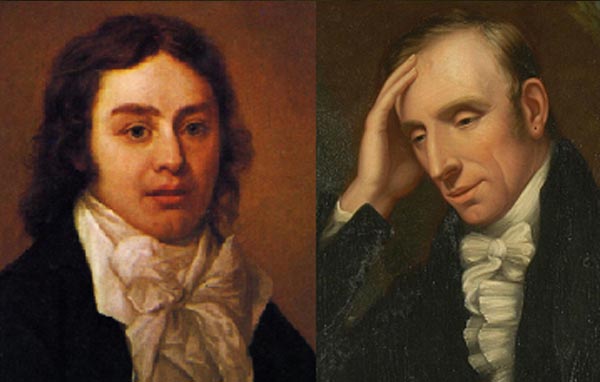
William Wordsworth and Samuel Taylor Coleridge were two of the leading poets of English Romanticism. Friends and collaborators, they revolutionised poetry with the joint publication of Lyrical Ballads (1798), a work that marked the beginning of the Romantic movement in English literature.
Life is in your hands
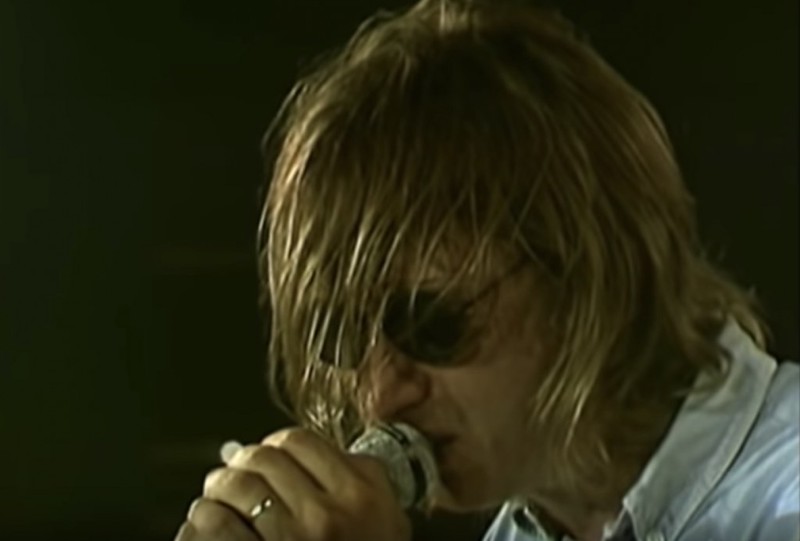
Whether everything is predetermined or the world is a random chaos, some part of our lives is in our hands. “It’s my life.”
Excluindo as imagens criadas pelo autor deste blog, as imagens utilizadas neste post têm as seguintes lincenças:
Rolling Stones: Raph_PH https://commons.wikimedia.org/wiki/File:Rolling_Stones_bow_post-show,_London,_22_May_2018_%2841437870545%29.jpg
Talk Talk: “Mark Hollis-onstage 3” by Dr. Space, CC BY 2.0
Wordsworht and Coleridge: https://www.biografias.es/famosos/william-wordsworth.html


Termos e Condições