The unfortunate interaction between excessive quantities of grogue and the motion of a sailing boat has, I am pleased to report, produced a measurable improvement in our collective judgement. Our three philosophers now approach the bottle with considerably greater caution than during the first days of the voyage. This newfound moderation, however, has done nothing to diminish their enthusiasm for argument. On the contrary, the debates have become longer, more coherent and, in some cases, even louder.
Captain Jackdaw encourages this tendency whenever the sea is calm enough to permit conversation. Whenever a silence threatens to settle over the cockpit, he has the unnerving habit of introducing a question, an anecdote or an observation calculated to provoke disagreement. Having lit the fuse, he then leans back and watches the explosion unfold with the satisfaction of a man who has found an economical form of entertainment in the middle of the Atlantic.
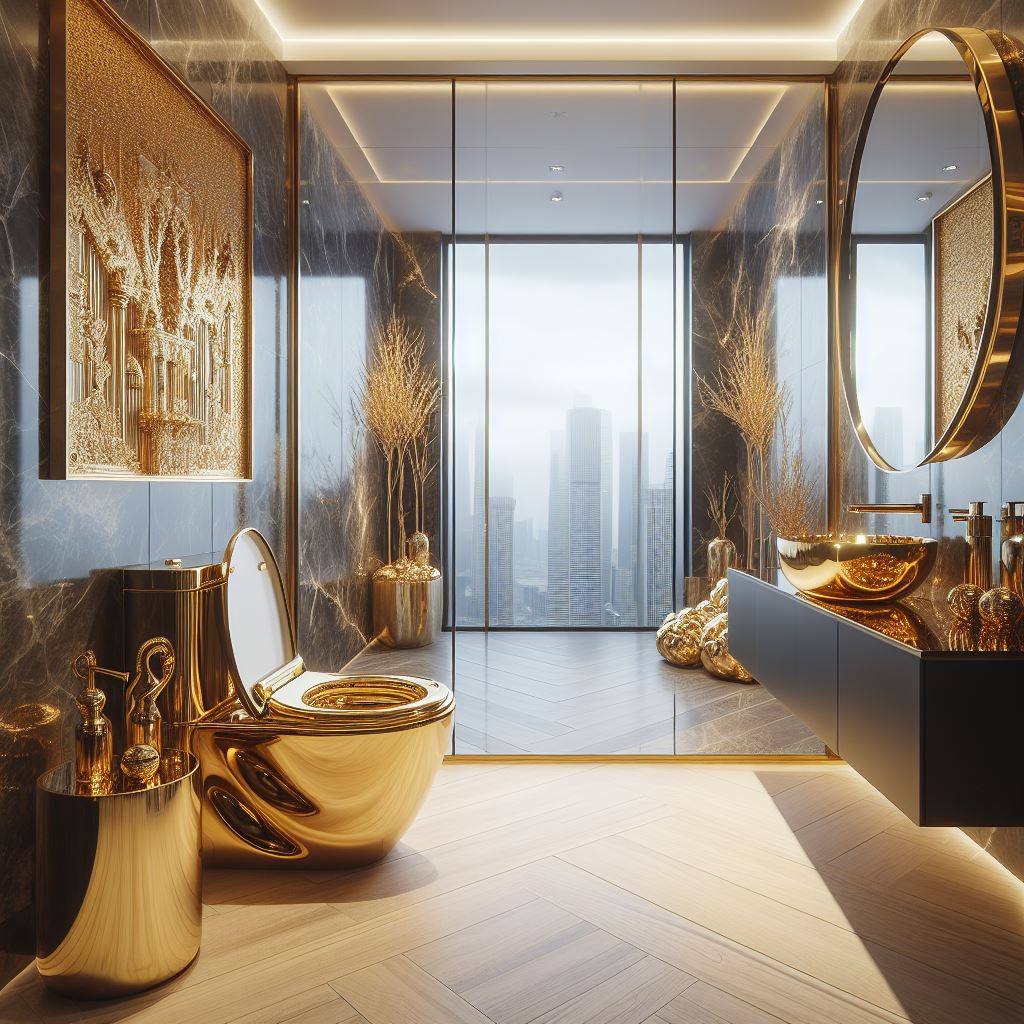
“Last year, while passing through Antwerp on my way back to Portugal, I met another Portuguese fellow called Rafael, who entertained us for almost an entire night with stories about an island where there is no private property and the lavatories are made of gold!”
“Gold lavatories!? Where is this island?” I asked in astonishment.
“In the South Atlantic, near…”, Locke coughed loudly over the Captain’s voice, “… well off the shipping routes. More extraordinary than the material of their lavatories is the entire organisation of that society. It left me wondering whether those people underwent a social evolution different from our own, or whether their form of government altered a human nature that we once shared.”
I could tell from Captain Jackdaw’s expression that the bait had been cast; all that remained was to wait for somebody to take it. The faces of our fellow travellers revealed intense mental activity, but it was “Bad Tom” Hobbes who cracked first, half a minute later, his face contorting as he struggled to contain himself.
“Human nature is the same everywhere on the globe, driven by the same causes, and no government can alter its nature. At most, a strong authority can control it and direct it towards the proper ends.”
“And who decides what those proper ends are?” asked Johnny Locke.
“The authority to whom citizens entrust their fate. Human beings require protection from the world and, above all, from other human beings. That is why the social contract between citizens and government, whether embodied in a sovereign or a parliament, consists in delegating to a strong authority the power to decide what serves the common good.”
“I agree that political power is a function that may be delegated,” Locke insisted, “but that power must be limited by law.”
“Johnny, things are good or bad according to the pleasure or pain they produce. The material world of men is governed by appetites and aversions; there is no summum bonum, no ideal of justice. Every man looks after his own interests and, left to themselves, they inevitably compete with one another. What you call law is merely another word for division, for diminished and shared authority, for competition between appetites. A strong authority makes those decisions and, above all, guarantees the security of the community against internal and external threats. Everything else is secondary.”
“Now I know why you bought the Harley. You couldn’t control your appetites and developed a belly too large to fit behind the tank of a Ducati!” exclaimed Russo.
“Seriously, Tom, are you trying to convince us that passions are the engine of all your decisions and actions?” asked Locke.
“I do not need to convince anyone. I merely need to demonstrate it, in the same way one demonstrates a theorem in geometry.”
“Precisely, Tom. Like geometry itself, human nature is grounded in reason, sustained by the Divine, which allows us to understand our purpose,” Locke replied.
“Oh, don’t start turning this conversation into a religious sermon, Johnny. Material reality does not reveal itself through revelation. Whoever governs on Earth possesses absolute authority, and the Church has no business interfering,” Tom countered.
“I agree that rulers do not govern by divine appointment. Nevertheless, they cannot govern as though they stood above everything and everyone else. Their power must be constrained by the common interest expressed through law. Law not only restrains the excesses of government; it also protects private interests, which themselves underlie the common good. Private property, for example, would quickly fall into neglect if its owners had no assurance that it could not be taken from them at any moment. Who wishes to invest time and money in something that may be arbitrarily confiscated?”
“Here comes the materialist after the realist!” exploded Russo, who until then had remained a spectator. “Why not ask instead about freedom against the oppression of private property?”
“Don’t start radicalising the discussion,” hissed Locke.
“And what about the civil freedom to participate in political decisions?” Russo demanded, wagging a finger in the air.
“Bah! Freedom is overrated,” interrupted Hobbes.
He was preparing to spit on the deck, but a disapproving glance from our skipper persuaded him to swallow the impulse. “Ahem!… What use is freedom if a person lives in insecurity? A strong state with absolute power is the only solution for living without the fear produced by insecurity.”
“The fear which, in reality, is often manufactured by certain sections of the media, in some cases for political purposes. The simplest statistical analysis shows that we live in a safer world,” observed Captain Jackdaw.
“Exactly. Fear is the foundation upon which totalitarian states and extremist parties build their arguments! Sacrifice a few liberties in exchange for control and security, isn’t that the idea?!” I accused in excitement.
I felt my cheeks redden when everyone fell silent for a few seconds and looked at me with mild surprise. Then Hobbes continued as though I had said nothing at all.
“A State that guarantees the security of each citizen and does not threaten his life is perfectly legitimate, because it safeguards the interests of every citizen, namely security and a life free from fear. The moment it ceases to fulfil that function, it ceases to be legitimate. Therefore, there is no totalitarianism, the State just ceases to exist.”
“There is totalitarianism because power is alienated into the hands of others. And since we do not form part of the legislative power, the law itself becomes a source of oppression,” Russo shouted.
“The noble savage reveals his animal side…” sighed Locke.
“Don’t provoke me, Johnny! Are you taking the Scotsman’s side now?” Russo exploded.
Hobbes lit another cigarette.
“With passion, that much is true,” he murmured.
“Your private property, Johnny, is the source of inequality and encourages precisely the competition and fear that Tom was talking about,” Russo accused. “Genuine security can only be achieved through a social transformation capable of creating a true sense of community.”
“You must be taking something to see society in such rosy colours,” Hobbes remarked dryly.
“No, Tom. I see society as the source of the corruption of men, and women too,” he added, turning towards me. “They have been dehumanised by urbanisation, by modern technology and by a failed educational system. All of it contributes to a selfishness that alienates people from one another.”
“And what exactly do you propose to do about it?” asked Locke. “Ban private property? Enforce a general will and purge the dissenters? Send people off to re-education camps?”
“You are a cheap and manipulative demagogue. You have a particular talent for selecting verbs when describing other people’s ideas,” Russo shot back. “Civil society transforms the human qualities of the state of nature into social virtues and allows the emergence of a moral quality that did not previously exist. Through the social contract, a general will may be established. Citizens transcend their natural liberty, which is governed by appetites, and acquire a moral or civil liberty instead. And rather than allowing wealth to accumulate in the hands of a greedy elite, the State distributes property and guarantees equality among all.”
“And it is my ideas that are supposed to be absolutist!” exclaimed Hobbes.
“And how exactly does the State accomplish that?” Locke demanded. “Does it gather together all property owners and relieve them of their possessions, one way or another?”
“The problem, Johnny, is that you are so attached to this idea of ‘mine, mine, mine’ that you fail to realise the issue is not whether something belongs to me, to you, to him or to us.”
“For a moment there,” said Locke, “I thought you were about to tell me that the tool is not yours, not mine, but ours, belongs to everybody.”
“And what would be wrong with that? The only thing required is a change in our perspective on private property. Change is a process. It requires educating citizens differently. And above all, it requires us to rethink our communities, because cities like the ones we inhabit today, places where we live as strangers to one another, are not communities at all.”
The rivalry between the trio continued, but I think this exchange is sufficient to give you some idea of how our days unfold in the middle of the ocean. It is fortunate that Captain Jackdaw laid in such generous stocks of grogue before departure. It remains the sovereign remedy for all hostilities. A few glasses are usually enough to have the boys singing in unison.

The Island of Golden Chamber Pots
Utopia, written by Thomas More and first published in 1516, is one of the most influential works in the history of European political and social thought. Conceived as an implicit critique of the inequalities, corruption and injustices of contemporary Europe, the book employs fiction as a means of questioning reality itself.

All belongs to the buy-operative.
The Torre Bela experiment emerged from the turbulent years that followed the Carnation Revolution, a period of intense social transformation and land occupations throughout Alentejo and Ribatejo. In 1975, the estate was taken over by agricultural workers, who reorganised it as a cooperative farm and attempted to put into practice a radically different model of ownership and collective labour.
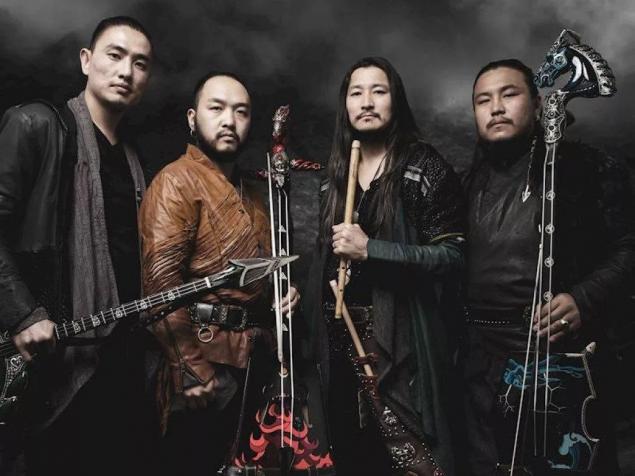
Shandies of the Mongolian Steppes
The Hu are a Mongolian band that combines traditional instruments with modern rock and metal influences, creating a distinctive style often described as “hunnu rock”. Their music evokes the vast Mongolian steppes, with their open landscapes, galloping horses and powerful sense of ancestral heritage.
Excluindo as imagens criadas pelo autor deste blog, as imagens utilizadas neste post têm as seguintes lincenças:
Filme Torre Bela: Thomas Harlan / Medeia FIlmes https://medeiafilmes.com/filmes/torre-bela
The Hu Wolf Totem: https://www.fathipster.net/sh/recenzije/2020/01/01/hu-gereg-2019


Termos e Condições