I do not know what sort of spell was cast upon me, nor whether someone slipped something into my food, but the fact remains that I fell fast asleep immediately after the last mouthful of dinner. By the time I woke, we were already approaching the island, little more than three miles from shore.
It was a rather dispiriting awakening.
I was still rubbing the sleep from my eyes when I caught sight of the place where we were about to land. The last remnants of sleep liquefied and drained legs down as we approached Porto da Casa, the harbour of Corvo Island. Nestled in the most domestic corner of the island, at the foot of the village, it seemed far too exposed to offer much protection to a vessel attempting to dock.
As we approached, the waves appeared to pay no heed whatsoever to the harbour’s modest breakwater. They swept across the coastline as if it belonged entirely to them. I imagine that on a day of stronger winds, with the Atlantic driving a vessel before it, one might sail straight through Porto da Casa and land at the airport, scarcely a hundred metres beyond.
In the end, probably thanks to the Captain’s skill, my fears proved unfounded. The mooring was carried out swiftly and efficiently, and before long the Captain, the lunatic pilot and I were standing on the pier with solid ground beneath our feet.
The island appears not to possess a single tree. Instead, it is carpeted with grass so soft that one could almost believe it possible to roll down the hillsides beneath those green blankets without uttering so much as a yelp. The truth, however, is that there is only one real slope, the one upon which Vila do Corvo has been planted: a small labyrinth of low houses and narrow lanes. The rest of the island seems to have been carved by some brutal cutler who left not a single coastal plain behind. Instead, there are only scattered heaps of stone debris from his work, forming little corners that can only with considerable generosity be described as secluded beaches.
“Let’s go to the Metralhas. We need a proper welcome meal,” the Captain instructed.
He led us uphill and, after a turn to the right and another to the left, we found ourselves on the opposite side of the village, standing before a snack bar which, at first glance, appeared to have very little story to tell.
Stepping inside left me strangely unsettled. Not the sort of disorientation brought on by fatigue or by losing one’s bearings, but rather the collision between expectation and reality. Here we were, on the remotest fringe of Western Europe, a fragment of land adrift between continents, and instead of finding some rustic tavern preserved from the erosion of time, I found a snack bar indistinguishable from countless others scattered throughout small towns across Portugal.
We passed through the aluminium-framed enclosure erected around the triangular terrace to shield customers from the island’s harsh weather. A low wall formed the hypotenuse of the area while two large awnings stretched along the catheti.
Inside stood the familiar furnishings of any Portuguese café: plastic tables and chairs emblazoned with soft-drink logos, a formica counter, glass-fronted refrigerators, a coffee machine hissing steam, and practical wooden tables with varnished tops designed for a quick wipe with a damp cloth.
There was no trace of tourist folklore, nor the slightest attempt to create any. This was not a place arranged for visitors like a carefully composed postcard. It was exactly what it appeared to be: somewhere locals came for coffee or a galão, and a gathering place for conversation over grilled fish and seafood, should one’s appetite be inclined to stretch that far.
Perhaps the strangest thing of all was its normality. It was as though the island, rather than dressing itself up as an exception, had chosen to present itself in its most ordinary and functional form, entirely indifferent to the exoticism the maps attribute to it. And somehow that indifference felt more mysterious than any picturesque landscape.
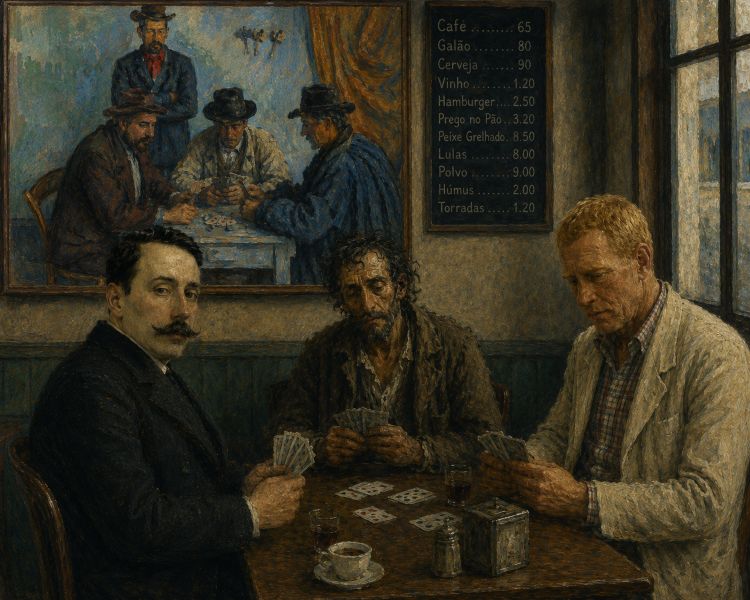
“Not even dead souls come here”, said a voice from the café’s only occupied table.
For a moment I froze, mouth half-open, convinced that I had somehow voiced my thoughts aloud. Then I realised the man was speaking not to me but to the two companions seated with him, his eyes fixed on the card game spread across the table. Perhaps these were the Metralha Brothers [The Beagle Boys] after all.
“Play your hand. You’ll see, she’ll come. We might not even finish this game before she arrives,” said one of the others.
He had the look of a northerner about him, far too tall for the table, his skin reddened by the sun.
“Mine,” snapped the third.
“You’ve been lucky today, Gabiru,” observed the northerner, addressing the bald-headed figure seated with his back to the corner of the room.
“You should save some of that luck for later. You’ll need it when we play against her,” said the first man, dressed in the old-fashioned black burden of permanent mourning embraced by the Romanis.
“Always spinning yarns, Bardão. Let her come,” replied Gabiru.
“You live in dreams. Our greatest dream is not losing that game. It’s not dying,” cut in the man in black.
“I’ll beat her,” replied the northerner more loudly.
“You’re more of a chess man. Maybe even a bridge player. But bisca…”
“Different rules. Same game.”
“Perhaps. You’re just like Gabiru. You withdrew from the world and came to this bend in the wind looking for wisdom. You thought you might find the transcendent in desolation. And you were counting on the help of that hermit up there in the middle of the emptiness of nothing. Well, you’ve found the nothing. The absence of meaning. Or rather, you’ve found that the meaning of life is death.”
“Says the pot to the kettle,” interrupted Gabiru.
We sat down at the next table, and our arrival finally drew the card players’ attention. The man in black fixed his gaze upon us and continued, as though the café had suddenly become the stage of a drama that had been running uninterrupted for years.
“You should know, young lady, that here, on this island, words come to an end. Here the world we know comes to an end. Here, in this tremendous isolation, where artificial life has been reduced to the bare minimum, only eternal things endure. There is no escaping the monotony of existence, the solitude that surrounds us, the solid architecture of the mountains that close in and crush us.”
He continued, directing at me the fish-like eyes of the lonely ocean depths, his moustache concealing a mouth that one imagined perpetually melancholy.
“In this wilderness, men endure a hard and monotonous life, performing the same gestures every day and repeating the same half-dozen words until death.”
He suddenly cocked his right ear towards the air and whispered “I can hear Time circling…”.
“That’s Chico’s tractor,” replied the northerner. “Come on, play. Let’s see if we can finish the game before she gets here. That’s the match that really matters.”
“Time always the same. A minute, a year, a century. And this dampness. This moss…”
“Stop feeling sorry for yourself. At least you haven’t lost the game yet. The other fellow kicked the bucket over at Samarra’s café,” sighed the northerner.
“What good did it do you, fleeing here? We’re all waiting for death. Existence is monotonous. There is time for everything. Time lasts for centuries. And here we are, buried beneath conventions. We use the same words, perform the same gestures, play the same cards, win the same tricks…”
“Worse than suffering is not suffering. Worse is never feeling again. To have empty sockets turned towards the heavens and see no starlight reflected in them,” interrupted Gabiru.
“The worst thing of all is to go to the grave with one’s mouth tasting of banality and dust,” concluded the man in black.
Then he raised his voice.
“Three more lagers over here. My throat needs clearing.”
Our food arrived together with the card players’ beers.
“A delicious vegetarian burger in a land of meat and milk,” observed the man with the melancholy moustache. “I believe I have worked up an appetite myself. Bring me a portion of hummus, if you would. And some toasted bread.”
The order was delivered in the same loud voice with which he had announced the inevitability of death. For the remainder of our meal, the three men fell silent, bent over their endless game of bisca. The deck seemed condemned never to run out. The cards were gathered, shuffled, and dealt again for yet another round of tricks, while in their eyes lingered the sadness of a premonition that, in the end, all of them would lose.
We left the café satisfied with the food, though somewhat depressed by the conversation. The island truly is a wilderness in the middle of the ocean, an appealing place for anyone seeking isolation.
“We’ll pay a visit to the hermit tomorrow,” said the Captain. “I think we’d all benefit from giving our bodies a bit of rest.”
“I’ll head up to the Caldeirão straight away,” the pilot cut in. “I can rest there.”
We said our farewells to our travelling companion and made our way down towards the centre of the village, where our lodgings awaited us. It was there that I finally found the time to write and send you this message.
I must confess I am curious to meet this hermit who chose to retreat to such a remote corner of the world, and who now finds visitors travelling great distances simply to confront him with existential questions.
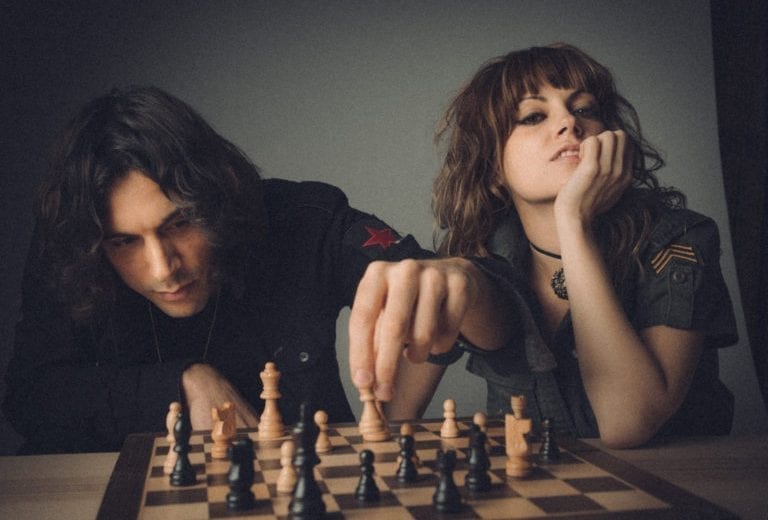
Hideout for Wanted Men
A song by The Last Internationale came to mind as I watched the men playing cards in the café and thought of others who had sought refuge on Corvo Island, fleeing bounty hunters… or perhaps fleeing themselves.
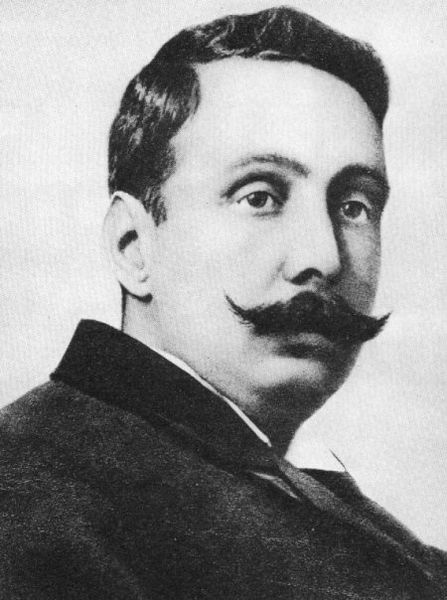
R. Bardão
A journalist from mainland Portugal, he arrived on the island intending to begin a journey through the Azorean archipelago. His plan was to write a pioneering travel book entitled The Unknown Islands. He never left.
Excluindo as imagens criadas pelo autor deste blog, as imagens utilizadas neste post têm as seguintes lincenças:
Raul Brandão: https://commons.wikimedia.org/wiki/File:Raul_Brandao2.jpg
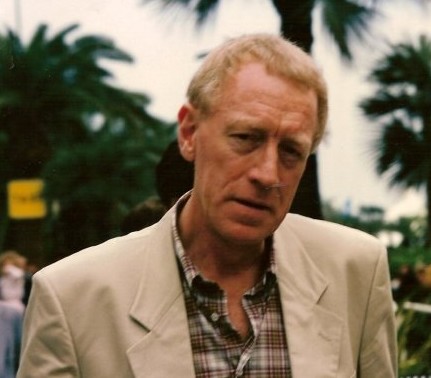
Max von Sydow: https://pt.wikipedia.org/wiki/Ficheiro:Max_von_Sydow_Cannes.jpg
The Last Intertationale: https://www.kmon.info/es/musicales/concierto-the-last-internationale-vitoria-gasteiz


Termos e Condições