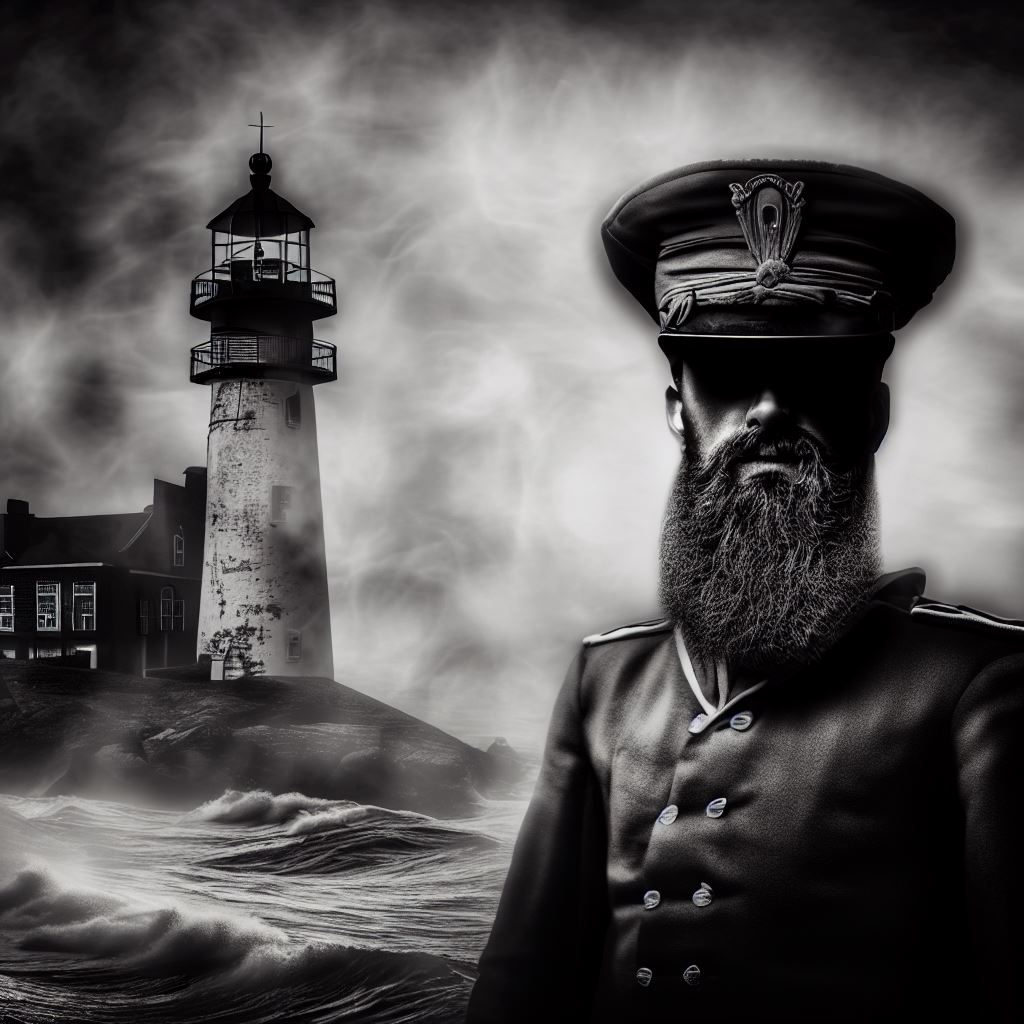
We spent the weekend recovering from our seasickness. The day after arriving I was still aching all over, but we went out to stretch our legs and explore the village. It is a settlement nestled lengthwise along a narrow valley, with three or four streets running from the houses on the ridge down to the small harbour sheltered in a tight cove beneath the watch of an old fort. If you dropped a marble at the door of the first house on the hill, it would roll straight down to the sea without straying more than a dozen metres from its course.
On the western side of the harbour, a road leads to the airport, aligned with the western coast of Santa Maria Island. To the east lie half a dozen hamlets, twenty or thirty houses in each, and the Gonçalo Velho Lighthouse, where we had been invited to dinner at the lighthouse keeper’s home. He was an old friend of Captain Jackdaw’s. The lighthouse stands isolated at the tip of the island’s southeastern headland, accessible only by a narrow road with steps running up its centre. It is a challenge for any driver, but nothing that frightened our taxi driver.
“I drive up this slope with my eyes closed. I know every road around here, although the truth is there isn’t much to discover. You can do the whole circuit of the island in a day. It’s not like when I was an emigrant in Los Angeles; every fare was an adventure. Later, on the way back, I’ll tell you about the time I drove a guy to Nakatomi Tower.”
Despite having a taxi only a phone call and a cigarette away, we felt the isolation of the promontory. It was precisely what the lighthouse keeper had sought for many years. Upon reaching the rank of Commander, he had submitted a request to be posted alone to that station and, whether for financial reasons or because of some old favour, the request had been granted.
“My passion for solitude could hardly have been more completely gratified. I do not say satisfied, because I believe I shall never be entirely sated by the pleasure I have experienced here day after day.”
His physical appearance did not betray the misanthrope he claimed to be. With a body as straight as a mast and a gaze even steadier than Captain Jackdaw’s, he was impeccably dressed in his Navy uniform. His long beard had been trimmed with square precision. He seemed thoroughly aware of the social habits that are often abandoned by those who spend long periods in isolation. Captain Jackdaw signalled that he wished to speak privately with his friend, so I took the opportunity to explore the views.
I was spellbound. From the lighthouse tower, the coast of Santa Maria stretches northward and westward like an ancient parchment, creased with ravines, dry-stone walls and green terraces that seem to be slowly slipping into the sea. On the eastern side of the island, visible from the lighthouse, the pastures ripple in the wind in rivalry with the ocean swells, dotted here and there with small stone houses crowned by red roofs, motionless in an age-old resignation. The cliffs descend abruptly in uneven terraces to coves of black pebbles where the ocean foams in a methodical effort.
On the seaward side, the world opens into an almost oppressive vastness. Perhaps because I knew I was on an island, the Atlantic seemed to be in motion, travelling from some remote place towards an unknown destination, and I could almost feel the land beneath my feet resisting the pull of the currents. I closed my eyes for a few moments, trying to feel that tug of the sea, the litany of waves beating rhythmically against the cliffs growing until it became almost human, like a desperate prayer.
I opened my eyes and felt a surge of vertigo that steadied itself, already in distress, upon the line of the horizon, purpled by the departure of the sun hiding on the opposite side of the island. There was not a soul in sight. Only gulls high above, gliding with majestic slowness, as though they were waiting for the island to come to them before allowing themselves to land once more upon the earth.
“There are days when I spend my time in a kind of ecstasy that is impossible to describe,” interrupted the lighthouse keeper, guessing the emotions written across my face. “Would you like to see the view from the lighthouse gallery?”
I nodded enthusiastically. I pulled the zipper of my waterproof jacket closed, more from an instinctive need for protection at such heights than to guard myself against the lofty wind.
Surprisingly, the interior of the lighthouse lacked the functional coldness one would expect from an isolated station at the end of the world. The immaculate walls, painted in an aged white, looked as though they had been whitewashed the day before. The dark polished wooden floor creaked with dignity beneath our footsteps. Every object, from the nautical instruments to the framed black-and-white photographs, seemed to have been placed with silent intention, like a secular altar devoted to order and time. The conspicuous care devoted to the arrangement of every room gave the impression that the arrival of important visitors was imminent, visitors certainly far more distinguished than ourselves or even senior officers on a routine inspection. Perhaps some member of a royal family in exile.
The spiral staircase, narrow and fitted with short steps, forced us into a claustrophobic ascent, our chins tucked against our chests as we watched each step. When we finally raised our heads upon emerging into the lantern room, the world opened in every direction. The jagged coastline, the rolling fields, the liquid light of the Atlantic and, beyond it all, the translucent emptiness of the horizon. Behind us, the lighthouse mechanism pulsed with its heart of glass and metal, alive like a sleeping beast lifting an eyebrow for a moment to contemplate the intruders. The lighthouse keeper showed us the details of the lighthouse with the restrained pride of someone entrusted with a secret passed down only to a select group of initiates.
After the brief lecture, we descended once more, following the keeper into the dining room. There was a ceremonial quality to the arrangement of the polished table, prepared for a supper worthy of an admiral’s flagship: cutlery aligned with mathematical precision, crystal glasses, linen napkins folded with ritual geometry. I was already imagining the arrival of a properly uniformed servant to attend to us when, instead, I heard a familiar sound coming from the direction of the kitchen that left me momentarily puzzled.
Only then did I realise that four places had been set. I looked at Captain Jackdaw, who avoided my gaze while adjusting the lapel of his jacket. Someone else would be joining us.
It did not take me long to recognise the same syncopated knocking sound I had heard at the marina on the night of the flashes. It was as though someone were approaching with a staff in hand or a rough walking stick. My muscles tensed as I waited for a threatening figure to appear; yet the man who emerged was an old sailor supported by a wooden leg and sporting an Abraham Lincoln beard – which I was later told was known as the “Shenandoah” style. He was a former whaling master and, apparently, the only company the lighthouse keeper occasionally allowed himself.
“Captain Ed is a man unlike any I have ever known. He does not speak much, but when he does, it is best to listen,” said the lighthouse keeper, introducing the other guest.
I do not know how a misanthrope can claim that a man rarely speaks, but perhaps the keeper’s own reserve robs the old whaling master of his tongue during their private meetings. I am not sure what to call them. I would call the lighthouse keeper eccentric, were I not already in need of that word to describe the man seated beside him.
When the wine was served, the whaling master rose from his chair as though he had suddenly remembered his cue. He lifted his glass to eye level, arm outstretched, and, like a Shakespearean actor, unleashed a torrent of iambic syllables curled in a sea of histrionics.
“O exalted nectar worthy of Elysium, delivered by the hands of great Dionysus! And what do I behold here at the centre of this feast?”
His gaze fixed itself upon the roast chicken.
“A divine delicacy descended from Olympus so vast!” he declaimed, raising the aluminium tray in one hand and revealing a label on the underside that was anything but epic: “Snack-Bar A Travessa – The Feast of Olympus. Family Pack Available.”
And like this the entire dinner went on. The austere lighthouse keeper and the burlesque whaling master conducted their exchanges as though performing an incoherent dramatic work for Captain Jackdaw and me, seated on the opposite side of the table. Dialogues? I should rather say Captain Ed’s monologues.
“Let no man speak of me the same words once uttered of the unfortunate captain who never drank water, victim of a hydrophobia that kept him forever ashore! Of me, no one has ever dared dictate what I may or may not drink! Divert me from my purpose? The path of my resolve is laid in iron rails upon which my soul is firmly set!”
The volume of the whaling master’s voice rose in proportion to the amount of alcohol consumed throughout the evening, while the lighthouse keeper folded more and more of his rare monosyllables back into himself. Like a cabaret performance, the subjects changed one after another, each accompanied by the master’s dramatic retellings of episodes centred upon displays of his authority and courage.
After a long pause during which I thought the man might finally fall silent from sheer exhaustion, he stood and fixed me with a stare as though he had overheard my thoughts. Every wrinkle on his face hardened, like taut metal wires straining to hold the different parts of his countenance together.
“I know, young lady, the thoughts that churn within your mind. I recognise them in the faint disdain that lingers upon the faces of the generations of this digital age. Those thoughts never acquire a soul because you lack the breath that animated the chests of the people of my time. Yet I stand vigilant against whoever dares cast the first insult! Your sanitised gaze filters the light of the natural world, and, blinded by the brilliant torrent of liquid crystals, you are creatures blind from birth, ignorant that the visible objects surrounding you are masks fashioned from algorithms and mere binary impulses. I know of your revulsion for the bloody and brutal past. Do I have blood upon my hands enough to turn the sea red were I to wash them? The blood upon my hands fed many hungry mouths, and after them many ravenous dogs licked those hands clean. Before your petroleum and your plastics—which kill more in the oceans than anyone wishes to tell you—it was whales that supplied the oil that anointed the wheels of industry and kept the machinery of the world from grinding to a halt. And for the women who were your foremothers, it was from the whale that came the oil to light your loneliest nights, the ambergris to sweeten your skin, the baleen to support your bodies within elegant corsets. There was death, yes, because it was always a matter of death or life. How many times did men abandon the ropes lowering a dead companion ashore in order to seize the boat lines at the cry of ‘Whale sighted!’? The slaughter came from elsewhere—from the land of greed and industrialisation, from the mirage pursued by so many Azoreans who believed in the American Dream, a nation as capable of self-devouring as the Chinese giant and the Russian titan. Whaling became the most blasphemous of blasphemies because human avarice armed murderous factories with deadly harpoons spread across the oceans of the world. Human nature is unnatural, and our breath is made of sorrow, for we know that the coming of destruction belongs to us. We cannot stop, and only when we are extinct shall a new balance emerge in our world. Oh, heavy is the head crowned with the vision of our dreadful humanity, for it knows that it cannot govern the malevolent hearts of men! Leave me now. My palate is weary of the flavour of this conversation!”
And with that he withdrew, the echo of his wooden leg hammering against the floor fading into the distance beyond the open doorway.
The captain and I left the lighthouse keeper snoring in an alcoholic stupor and called a taxi to take us home.
“Captain Eduardo is quite a character. There are all sorts of stories about him, but everyone says he was never quite the same after he lost his leg,” said the driver.
“Was it some accident during whaling?”
“No, it was something less tragic. He got startled by an ocean sunfish while fishing alone and fell overboard with a rope wrapped around his leg,” he explained.
And we ended the night listening to the story of Nakatomi Tower.
I’ll tell you about it another time. I need some rest, I can barely keep my eyes open.
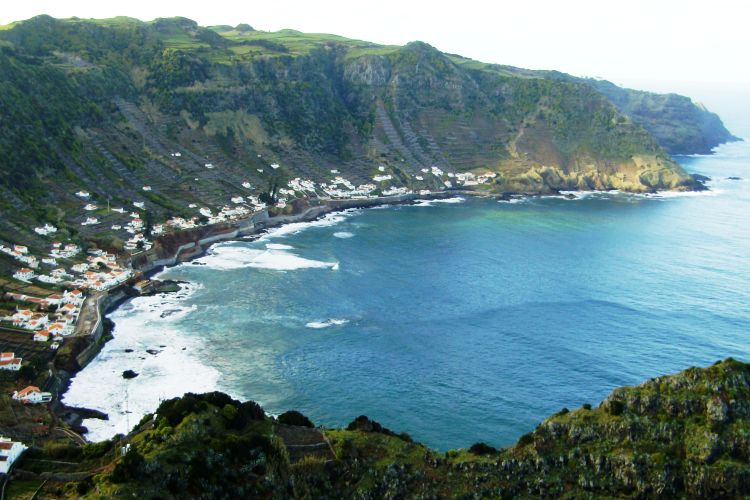
Santa Maria, Azores
Santa Maria is one of the nine islands of the Azores archipelago and lies at its southeastern extremity. With a climate that is less Atlantic and drier than that of the other islands, it is often known as the Island of the Sun. Activities related to the sea are the main attraction for visitors, particularly whale watching, with opportunities to observe blue whales, humpback whales, and even sperm whales.
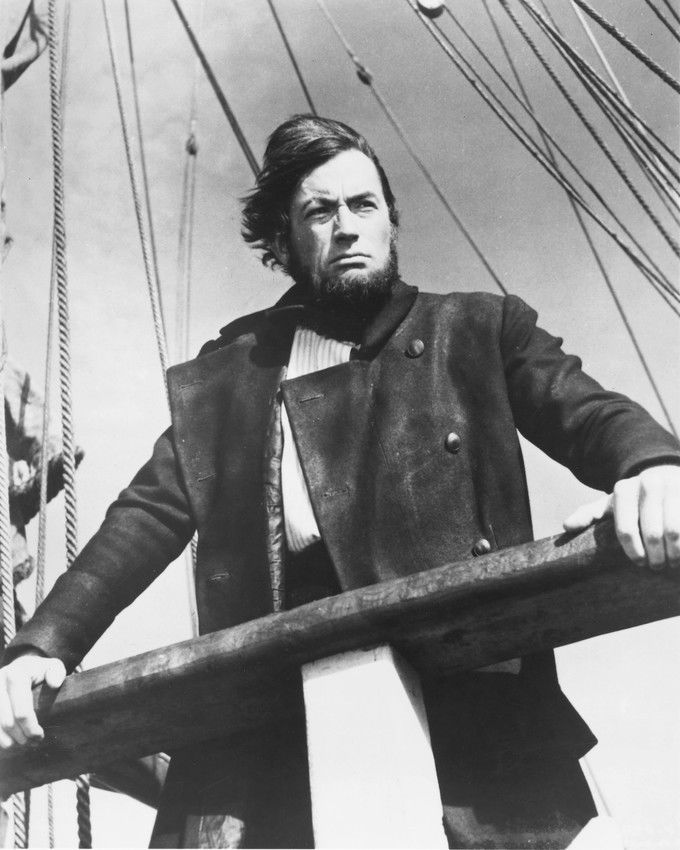
Captain Ed
A thirst for vengeance does little for one’s digestion, and it shows on Captain Ed’s face. To a past marked by pain, he has added a deep contempt for humanity and technology alike. The tragic and obsessive figure of Captain Ahab from Moby-Dick remains one of the most iconic characters in literature.
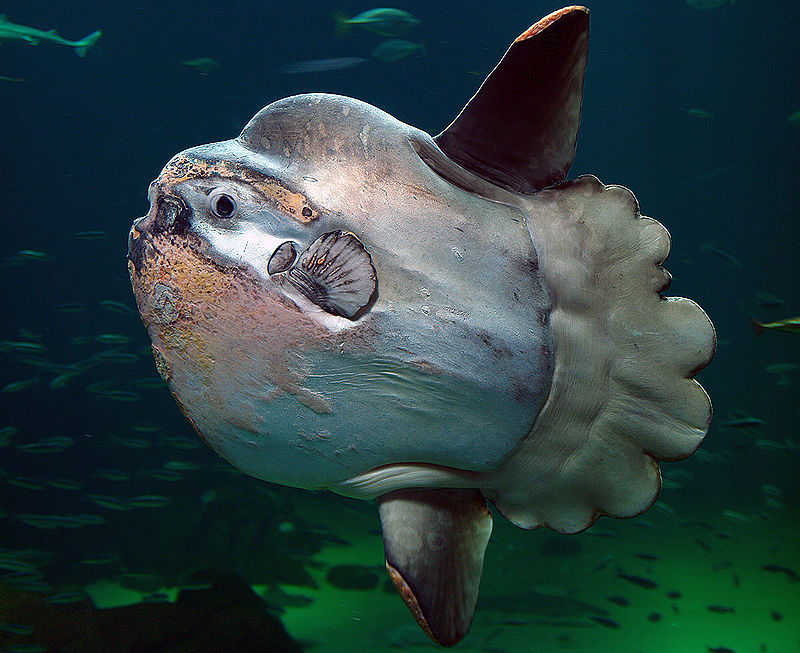
Ocean Sunfish
One of the most elusive fish in the world, the ocean sunfish is also the largest and heaviest bony fish on Earth. It was filmed off the coast of Santa Maria Island by diver and photographer Miguel Pereira. Its English name derives from its habit of basking at the sea surface, where it appears to be sunning itself, while the Portuguese name (peixe-lua, “moon fish”) is thought to refer to its distinctive round shape and its occasional appearance near the surface.
Excluindo as imagens criadas pelo autor deste blog, as imagens utilizadas neste post têm as seguintes lincenças:
Santa Maria (Baía de São Lourenço): Carlos Luis M C da Cruz https://pt.wikipedia.org/wiki/Ficheiro:Baia_s_lourenco_s_barbara_1.JPG
Gregory Peck in Moby Dick: https://commons.wikimedia.org/wiki/File:Peck_Moby_Dick.jpg
Peixe-lua: https://pt.wikipedia.org/wiki/Peixe-lua


Termos e Condições