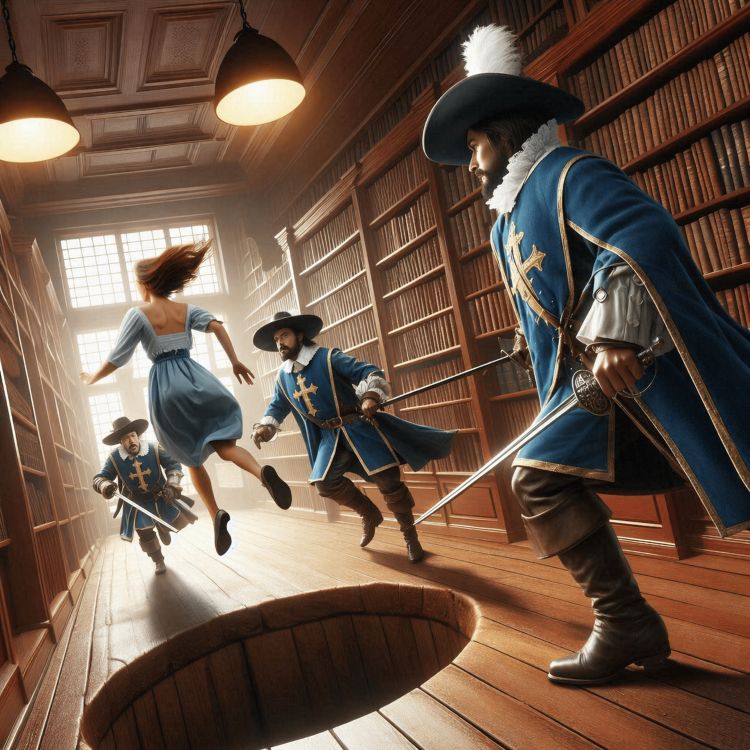
Have you ever tried to tell someone about something that happened to you, only to realise you have to go much further back just to make sense of it? That’s why I’m asking for your patience as you read this email, this long account. The past 24 hours have been so surreal that I still wonder whether it was all just a dream.
Do you remember Professor Ribeiro’s classes? The ones where he served us mythology at eight in the morning as if it were hot toast? The story of Theseus, the Minotaur, and the ball of thread that saved the hero’s life? We laughed when Calhotas said it was rather naïve that no one had brought a GPS, just another of his anachronistic remarks that would derail the lesson. Then Professor Ribeiro explained that following the thread meant retracing the path, but also following the narrative that gives meaning to the hero’s journey. I don’t know why, but that stayed with me. Perhaps because it explained something too simple to be obvious: we tell stories so we don’t get lost.
That must be what I’m doing here with you. And just as epics always began in medias res, as Professor Ribeiro liked to remind us, so do we live, without elegant beginnings, always in the middle of things. That’s how I feel, stumbling through a plot, trying to pick up the thread. It’s like walking into a cinema halfway through a film, with no idea how it began. And I suspect that, as I tell you what happened, I’m not just listing facts. I am also trying to make sense of something on the other side of the labyrinth, something that does not want to be caught, or perhaps wants to catch me. When everything starts in the middle, without a proper beginning, the best strategy is simply to hold on to the thread and keep going. Or to tell the story.
If there is a beginning, I think it was yesterday afternoon, among the shelves of the Setúbal library, upstairs. I was choosing some books to take home, my head tilted awkwardly as I read the titles along the shelves. As usual, I picked an eclectic mix: heavy novels, some literally, more philosophical works, the existentialists, and a few classics.
As I ran my fingers along the spines, I finally found the last item on my mental list: Alice in Wonderland. I reached out to open it, already anticipating the pleasure of Jabberwocky. But as I pulled it free, I heard a faint hissing sound and was suddenly blinded by a flash of light. When my vision cleared, I was on the other side of the shelf, in the German literature section, holding The Neverending Story, by Michael Ende. And on top of the books I had gathered to borrow was the one by Lewis Carroll.
“Did I just have a lapse in consciousness?”
The question kept echoing in my head for longer than would be reasonable, looking for an answer. I slowly put the book back on the shelf, almost afraid of triggering another shift. This time, nothing happened. Everything remained solid, obedient to the usual laws of physics.
At that moment, my phone vibrated and nearly made me drop all the books. It was a message from my boss, a meme with a white rabbit saying, “Oh dear, I’ll be so late!” A supposedly subtle reminder to send the overdue text before the end of the day. Still partly distracted by what had just happened, I quickly checked the books I had picked and got ready to leave. That was when I noticed a title on a spine that did not have the usual coloured library label. There was only the title and a small golden symbol that looked like a labyrinth.
Die Bibliothek, die dich liest.
I frowned.
“The library that reads you?” I translated, surprised and curious, but then pulled my hand away as if from a flame. “No. This is getting strange… and I don’t have time to explore it.”
As I turned to leave the section, something made me stop again. The corridor seemed longer. In fact, the whole room felt slightly stretched, and the path to the librarian’s desk seemed a little further away than usual.
“This is ridiculous,” I told myself. “It’s just fatigue. Or stress.”
I couldn’t stay there trying to make sense of it. I had to hurry. So I grabbed the linen bag with the books to return, which I had left on one of the reading tables, and headed quickly towards the librarian’s desk, balancing the books I was taking home against my chest. With my eyes fixed on keeping everything steady, I misjudged my steps and clipped the leg of a chair set away from a table. I nearly went sprawling in the middle of the room. I dropped the books onto the table just in time and let out a sigh of relief. In a library, most people do not pay attention to what is happening around them, but a dramatic fall with more than a dozen books would have made me memorable for a while.
“Calm down. You’ve got another bag. Put the books in there,” I muttered to myself as I did it.
With a bag on each shoulder, I set off again towards the desk. From a distance, I did not recognise the head behind the computer screen, but as I got closer, my legs almost gave way. Instead of one of the usual librarians, there was a new one. She looked to be in her fifties, slightly plump, with white hair. She was working at the computer with a strange smile. All the books I was returning were overdue, and I had been counting on the unspoken leniency that comes from familiarity. Now I could already see myself trying to explain my case to… I leaned in to read the nameplate on the desk.
Ms. Lortz.
Ms. Lortz?!?!
“Do come here. Don’t worry about interrupting me.”
An instinctive fear rooted me to the spot, but I forced myself to move forward, trying to make sense of it. Ms. Lortz. It had to be a coincidence. It was the name of the terrifying librarian from Stephen King’s story, the one who warned readers about the “Library Policeman”, a kind of creature that punished boys and girls who failed to return their books on time. And now I had to return books that were more than two weeks overdue to her double.
I braced myself for a public reprimand. There is nothing more embarrassing than being told off in front of a room full of readers, all pretending to be absorbed in their books, yet clearly listening with a quiet sense of satisfaction. That, and the fine I would probably have to pay. And since she was Ms. Lortz, my greatest fear was the undead creature she might summon to haunt those who failed to return books on time.
“You don’t need to be afraid, my dear. The worst that can happen is a suspension of borrowing privileges,” said Ms. Lortz, as if she had read my thoughts. Then she raised her voice slightly and cast a glance around the room. “For those who mistreat books, the punishment is different.”
I sensed a faint murmur of unease behind me and stood perfectly still. I hoped no one would recognise me, but I realised I was unlikely to escape public embarrassment. Ms. Lortz picked up the stack of books I had taken from the bag and began processing them. With delicate movements and a smile that seemed glued in place, she examined each cover as if judging it. I could not tell whether she approved of my choices or not. Her cold, piercing gaze did not match the politeness she displayed.
I thought about making conversation, trying to create some rapport. I waited for the moment when she had just finished entering one book and before she picked up the next. But my thoughts betrayed me.
“Do you know the book The Library Policeman?”
With a mild smile and a gaze that seemed capable of projecting grey matter straight through the back of my skull, she slowly shook her head. It was more disapproval than denial.
“Is it a book you wish to consult?” she asked, picking up her pen, her eyes burning into my brain.
I hesitated, then stammered, “No, it’s just… it’s a book by Stephen King.”
“Ah,” she said, looking away as she resumed entering the titles. “If we have it, it will be in the American literature section.” Then she added, with a faint trace of disdain in her voice, “I’m not familiar with it. I’m not particularly drawn to that kind of writing.”
I had antagonised her, I was sure of it. Perhaps she did know the book and now realised I was comparing her to a horror figure. Why had I asked that? What was I supposed to do now?
Gripped by a growing sense of dread, I remained standing by the desk, watching her inspect each returned book with the meticulous care of a forensic scientist. She checked the cover and back cover, the pages, the spine. Every now and then she narrowed her eyes at some detail, then sighed or clicked her tongue in quiet disapproval whenever she confirmed on the computer that the return date had passed. She worked slowly, without once looking at me.
My anxiety grew. I began to imagine a way to avoid being told off in front of the other readers, who were already pushing their glasses up their noses or tucking their hair behind their ears in small, restless gestures of anticipation. I couldn’t stand there any longer. I stepped away, my bag over my shoulder, distancing myself from that slow, almost customs-like process, trying to escape my thoughts.
I went over to the window in the reading room and suddenly remembered my car. In my haste, I had risked parking outside the library without a ticket and without managing to activate the parking app. I looked out towards the street and, sure enough, like buttered toast landing butter-side down, there was the wretched parking officer issuing a ticket.
“It’s all in order, I’m sure of it! I have to go, I’ll come back later to sort out the suspension!” I said in one breath as I rushed out of the reading room, so quickly that I gave Ms. Lortz no chance to object.
Too quickly, perhaps. At the top of the stairs, I failed to stop in time and collided with a man whose arm was strapped to his chest. He was wearing a strange bright blue tunic with a large golden cross embroidered across the front.
“My deepest apologies,” I said, worried I might have caused him further injury. Whatever had happened to his arm had clearly not affected his ability to swear.
“My…! Is that any way to walk in a library? You must be from the provinces!”
I placed a hand on my chest in a gesture of apology and tried to move on. Anyone who spoke like that clearly didn’t need medical help.
“Are you so rude that you turn your back without apologising properly?”
“I believe I did it quite adequately. I’m sorry, but I’m in a hurry.”
“If you are in such a hurry, then perhaps we can speak at a more convenient time, so that I may witness a proper expression of remorse.”
What kind of conversation was this?
“Tomorrow, at noon, by the entrance to the library.” he said.
I was running out of time and I had to avoid another parking fine, so I replied quickly.
“Very well, tomorrow, at noon, by the entrance to the library.”
I felt that I was scheduling a duel.
“I’ll be waiting for you. And if you do not appear, I’ll find out who you are and you will be barred from entering the library,” he threatened, his voice rising as I hurried down the stairs.
When I reached the ground floor, I found two women standing in the middle of the entrance hall. One of them was large and imposing. They were chatting lazily, like traffic officers running a roadside stop on a quiet country road. Determined not to wait for them to move, I tried to slip between them as I made my way towards the button that opened the glass doors.
At that moment, the taller woman swung her arm out to put on her coat. To avoid bumping into her, I twisted sideways, but in doing so I knocked the coat from her grasp and sent it to the floor. The other woman picked it up, smirked, and handed it back.
“Here’s your blazer, Xana. Careful, I think the fall knocked a ‘t’ out of Vuitton…”
The woman flushed red with anger, as if she might spit fire, and immediately launched into a barrage of accusations.
“Can’t you watch where you’re going?!”
I glanced at the coat on the floor, already irritated by her tone.
“I can see perfectly well. Better than you think. I can even read the label,” I replied, unable to resist the provocation.
Her face tightened with even more indignation.
“Instead of apologising, you mock people?”
It felt like a broken record. What was this obsession with apologies? She fixed me with a hard stare, and I stood there, trapped, desperate to get out.
“I’m sorry, I’m in a rush.”
“Then, I’ll have your apologies at another time,” she said. “Tomorrow, at one in the afternoon, by the entrance to the library.”
This was not just repetition. This was familiar in a different way.
“Very well. Tomorrow, at one.”, I agreed, trying to move past her fast and slipping outside as soon as the automatic doors began to open.
“If you don’t show up, I will find out who you are! You won’t set foot in this library again!”, she shouted from the inside of the building.
I reached my car, and the parking officer was already there, bent over examining the number plate.
“Excuse me, this is my car. I didn’t have any coins for the meter. I just came to return some books.”
He looked at me with that self-satisfied, locker-room smile of a man who thinks he’s in control.
“And the app?”
“It was blocked. It wouldn’t start.”
“Perhaps it’s not installed properly,” he said, his smile stretching smugly across his face as he pulled out his phone. “Would you like to give me your number so I can send you the installation instructions?”
He stood there like something out of a deodorant advert, complete with a football sticker-album haircut.
“I’d rather take the fine, thank you. And quickly, please. I’m in a hurry.”
Sulking, he reached for the ticket machine hanging from his belt. A man carrying books approached, and I felt compelled to voice my frustration out loud.
“I don’t understand why there isn’t a proper parking system for the library. There are facilities for everything else. Why not here?”
I now recognised him as someone I had seen earlier browsing in the reading room, and so I proceeded hoping for a sign of agreement.
“And I bet there are people who park here to go shopping and don’t pay. They leave their cars here, don’t pay, and don’t even use the library. Like that one over there, for example. He hasn’t paid either.”
The officer glanced at the car next to mine, a faint shift in his expression, his bruised ego quietly seeking compensation.
“I’ll deal with that now.”
The man gave me a look of pure disdain.
“Was that really necessary? Did it make you feel better? More justified? Haven’t you moved past primary school behaviour?”
I fell silent, unable to respond.
“You should be the one apologising for your conduct.”
The same refrain again. This time, I didn’t let the reproach continue.
“Tomorrow, at two in the afternoon, by the entrance to the library,” I cut in.
“Sorry?” he said, frowning.
“Tomorrow at two. I’ll apologise then. Now, if you’ll excuse me, I have other matters to attend to.”
When I turned back to the officer, he had already disappeared. The ticket, however, was firmly in place on the windscreen.
Wait, I have a call. I’ll send you what I’ve written so far and get back to you in a moment.
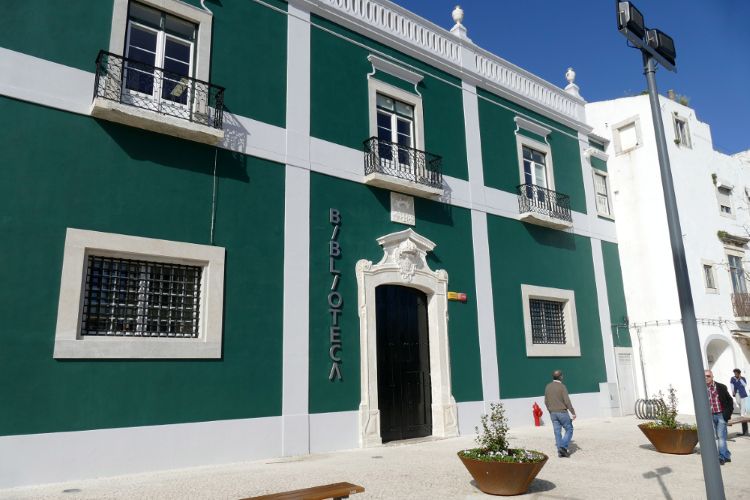
Sanctuaries of Liberty
Libraries remain among the safest places, where only the contents of books can truly surprise us or bring something out of the ordinary. A refuge from what lies outside, a source of strength for facing whatever awaits beyond their doors.
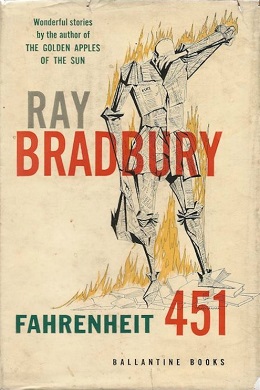
Books to Set the Mind on Fire
With the growing control over freedom of reading, the dystopia of Fahrenheit 451 feels increasingly relevant. The story takes place in a society where books are banned and burned by firefighters, whose role is to eliminate any form of critical thought.
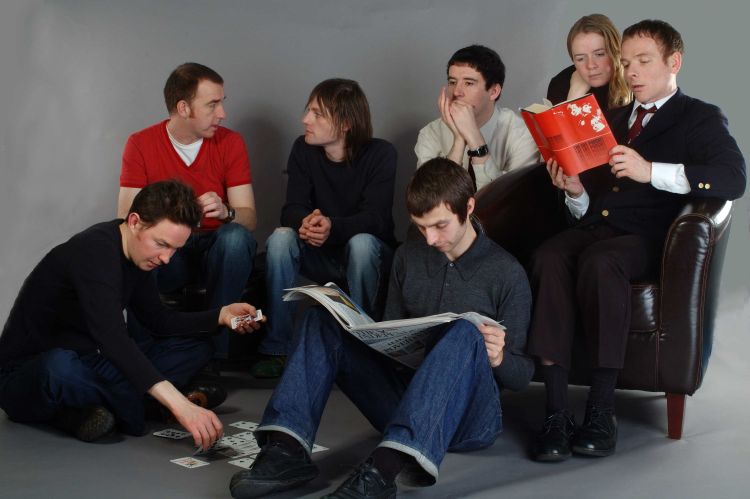
Aspirations Wrapped in Books
The Scottish indie pop band Belle and Sebastian are known for the captivating sound of their gentle melodies, but it is their introspective lyrics that truly hold our attention. The song “Wrapped Up in Books” appears on the album Dear Catastrophe Waitress, released in 2003.
All images used in this post, with the exception of those created by the author, are reproduced under the following licences:
Biblioteca de Setúbal: https://www.mun-setubal.pt/biblio-publica-municipal/#1530806197415-9becd77a-51b7
Fahrenheit 451: https://en.wikipedia.org/wiki/File:Fahrenheit_451_1st_ed_cover.jpg
Belle and Sebastian: by Marisa Privitera – from agency Bestest via e-mail, CC BY-SA 2.5, https://commons.wikimedia.org/w/index.php?curid=589335


Terms & Conditions