
We were a long way from the Bermuda Triangle, yet we had a strange encounter at sea. Perhaps this corner of the North Atlantic is the Triangle’s back door. I tried to memorize the coordinates – 41.70-something north and 41.40-something west – as the captain wrote them in the logbook. You’d be surprised by the things that lurk out here.
I cannot say exactly when and how it happened. In truth, nobody noticed it at first. We were each lost in our own thoughts, perhaps bored by the monotony of the open ocean, when suddenly we realized that the wind, which had accompanied us steadily until then, had vanished without warning. More than that, the waves lost their rhythm and flattened into a strangely motionless surface. Even the sounds seemed different. The creaking of the boat’s various fittings and the slap of water against the hull stood out in an unnatural silence, unnaturally sharp, accompanied by an aggressive echo, as though the horizon surrounding us were in fact an invisible wall that had sealed us off from everything else.
The captain appeared calm, but the rest of us were unsettled and began commenting on the strange, sudden changes. That was when we spotted something in the distance, gradually drawing nearer. Eventually we realized it was a sailing vessel with her sails raised, though she must have been using an engine to reach us. The captain left the Nómada drifting and waited to see what was coming.
Taking turns with the binoculars, we studied the approaching craft. It was a trimaran with a heavily weathered white hull, clearly long overdue for maintenance, judging by the faded lettering of her name, painted in a pink that had once been red. Only the word “mouth” remained legible.
“Put the fenders out. I think they want to come alongside,” the captain ordered.
A chill ran down my spine. We were utterly alone out there, and if this happened to be a pirate vessel, no one would come to our aid.
“They’re not pirates,” the captain assured us. “Just sea vagabonds who probably need a little help.”
Even so, I felt a deep unease as the trimaran approached and we finally made out the two men on deck. One wore a yellow oilskin suit from which emerged a round head crowned with sparse curly hair, scattered untidily behind a receding hairline that made his forehead seem even larger. The other looked as though he had been teleported directly from a law office onto the boat. He wore a suit and tie, and his hair was slicked straight back against his skull with some kind of grease that gave it a strangely oily sheen.
“Greetings! Finding you in the middle of the ocean is a mathematical proof that the square root of minus one can transform imaginary coincidences into real encounters!” shouted the man in yellow, making himself heard from the stern of his boat, where he was securing the boom after lowering the mainsail.
Their engine was off, yet somehow they had glided all the way up to us across a windless, mirror-smooth sea. How was that possible? The captain, however, did not appear remotely surprised.
“And where do your mathematical calculations take you?” he asked.
“Ah, we follow the continuous space,” the man replied with a smile. “But we were drawn here and suddenly, like a magnet resting upon an opposing pole, we rotated inconsistently.”
“How long have you been here?”
“Decades, it seems. You are the first living souls we have met in quite some time, though we are rarely alone. Sometimes there is music and we hear the sounds of parties and laughter. Other times there are screams of panic and cries for help.”
He finished the sentence almost in a whisper. Then he slowly looked around, as though someone unseen were watching us.
“My name is Donald. That is Faraj.”
He stepped closer to midships and extended a hand to Captain Jackdaw. The other crewman merely raised a hand from a distance and remained seated atop the cabin, watching us.
“Do you happen to have any provisions you could spare? My supplies were calculated with mathematical precision, but Faraj there appeared to me in the middle of the ocean after being thrown overboard from a wooden cargo vessel, and I had to take him aboard.”
“Faraj,” repeated the captain. “That’s an Arabic name, isn’t it?”
“It’s British,” replied the man, sounding slightly offended.
“It reminds me of Lawrence of Arabia,” added the man in the yellow oilskin with a laugh, glancing over at his greasy-haired companion. “He’s a politician, one of those whose function is to keep the entire political and economic system of the country, perhaps the world, moving. They wish to shape the course of history, much like the first shattered application of the idea that E equals mc squared. I am referring, of course, to the bombing of Hiroshima.”
“I am British!” the man repeated, raising his voice.
“Pay no attention to him. He is very sensitive about questions of nationality. When we spotted a cargo ship in the distance and I told him it was flying the Indian flag, he hid under the radio table.”
He turned back to the captain.
“Anyway, if it would not be too much trouble, might you spare us some food and drink? And if you happen to have a little alcohol, that would be splendid.”
“Of course. We have enough provisions to share. Come aboard,” the captain invited.
We were astonished by the amount of food and drink the captain began loading into two large crates that the man in yellow had brought onto our boat. Seeing our expressions, he gave us a reassuring glance, signalling that everything was under control.
The crates were set down on deck, and the captain uncorked a bottle of grogue and handed it to the man in yellow.
“I can see you’ve been at sea for a very long time,” said the captain. “And I suspect you have little interest in setting foot ashore.”
“I made a few wagers I should not have made. It is better that I stay away for a while.”
“That’s all?”
“The sea is my place of study, my laboratory. Not because I conduct any particular research on the sea itself, but because isolation allows me to explore my ideas more deeply.”
“And what ideas might those be, if you don’t mind my asking?”
“I have been making calculations aimed at developing technology capable of manipulating continuous space and enabling cosmic integration. That will free human intelligence and render physical existence unnecessary.”
“And is that a good thing? Abandoning our physical form?”
“We are highly intelligent beings, but unfortunately we require these ape bodies to carry our intelligence and give mechanical reality to our ideas. The problem lies in the limitations this imposes. We suffer pain, corruption and decay within human society, not because the human system is evil – it behaves correctly according to its own nature – but because the cosmos is attempting to persuade us to leave it behind and ascend to a higher plane.”
“Perhaps there are ways to change the system, no?”
“Perhaps. We may work quietly, attempting to persuade the system to accept us and change it from within. Or we may simply remove our intelligence to a more satisfactory system. In my opinion, anarchism will not change the system.”
“You seem to have a certain lack of faith in humanity.”
“On the contrary. Humanity possesses enormous potential, and love ought to be the foundation of our relationships. Unfortunately, our simian dimension limits our ability to realize that love.”
He glanced sideways at the other man aboard the trimaran.
“And unfortunately, some of us are encouraged to cultivate a selfishness that degrades us even further.”
He extended the bottle back toward the captain, but the captain gestured for him to keep it.
“I feel I ought to give you something in return,” he said, a broad smile spreading across his face. “How about keeping Faraj as an extra pair of hands to help aboard?” he suggested with a childlike laugh.
“He seems to me like unnecessary ballast,” the captain replied, laughing. “You keep it. You can keep the ballast.”
“Then allow me to ask another favour,” whispered the man in the yellow oilskin.
Standing apart at the far end of the boat, the two men spoke quietly for a few moments, the stranger resting a hand on the captain’s shoulder. Then, with surprising agility for someone dressed in such cumbersome clothing, he leapt back onto the trimaran, disappeared below deck, and returned carrying a cardboard box, which he handed to our skipper.
“Are you absolutely certain you don’t want the ballast? He’s no trouble at all. He says he doesn’t listen to music, doesn’t watch television, and doesn’t read.”
“No. This boat has clearly defined borders. You keep it,” the captain repeated as he cast off the lines. “You keep it!”
The man in the yellow oilskin smiled, stepped back aboard the trimaran, received the two crates we passed across, and stowed them below. He raised a hand in farewell, released the remaining lines, and pushed the hulls apart with his boot.
When he was already several metres away, drifting gently on nothing more than the momentum of that push, he shouted:
“The only trouble with man is that he takes life too seriously!”
Slowly the trimaran moved away from us, her sails raised, the two men seated together at the stern.
How they managed to travel through that uncanny calm, without wind and without waves, I still cannot understand. Yet away they went, while we remained where we were, drifting upon the motionless sea.
For a long while none of us spoke. The trimaran grew smaller and smaller, it became little more than a pale speck against the horizon and, finally, vanished on the horizon.
Only after it had disappeared did we begin to hear the wind again. At first it was merely a faint whisper somewhere overhead. Then a ripple disturbed the surface of the water. The sea regained its breathing, the waves recovered their rhythm, and the strange echoes faded as though someone had opened a door we had not realized was closed.
The captain watched the horizon in silence before finally turning back to the helm.
“Well,” he said, “that was Donald.”
Nobody reacted. And for reasons I cannot explain, none of us felt particularly inclined to ask about the cardboard box either.

The man in the yellow oilskins
The man in the yellow oilskins seemed to oscillate between a broad, friendly smile and a furrowing of the brow, his face lowered in concern or in an effort to recall something forgotten.

A man in a box
The sight of the trimaran drifting away from us into the endless ocean made me think of a crate adrift at sea, with a man at the helm searching for salvation. And it brought to mind Alice in Chains’ song Man in the Box.
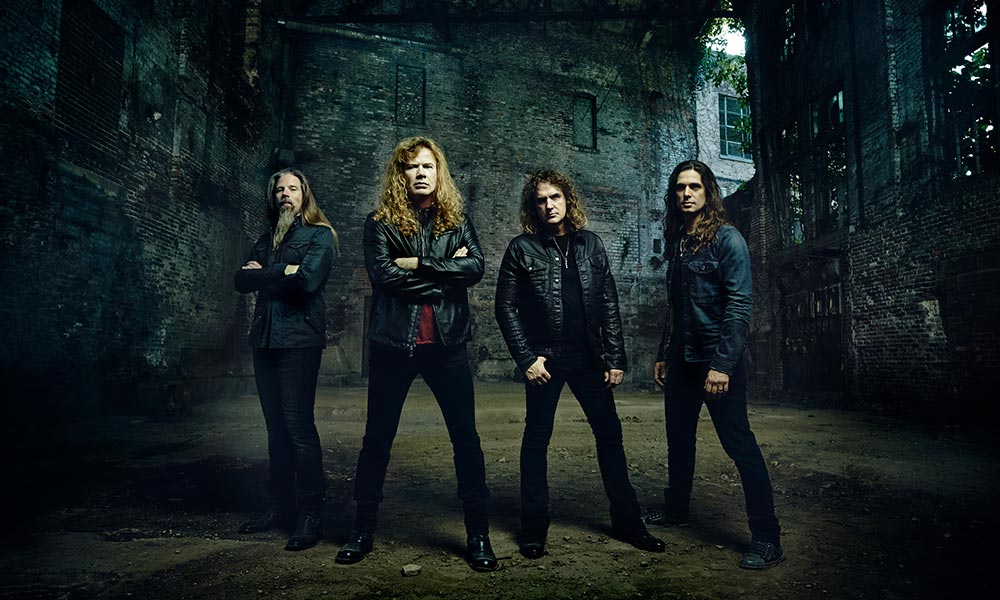
For those who may be interested
A Tout le Monde is one of Megadeth’s most emotional songs, replacing the band’s usual thrash metal aggression with a melodic and introspective reflection on farewell, mortality, and human connection.
Excluindo as imagens criadas pelo autor deste blog, as imagens utilizadas neste post têm as seguintes lincenças:
Donald Crowhurst : By Tribute to Donald Crowhurst, New Quay Inn, back beach,Teignmouth by Robin Stott, CC BY-SA 2.0, https://commons.wikimedia.org/w/index.php?curid=142716233
Alice in Chains: By Photograph by Paul Hernandez – Scan via pinterest.com (City Heat Magazine, December 1988, page 15). The same photo appears (in lower resolution) at the ultimate-guitar.com—note that the latter scan had more information printed, but still not a valid copyright notice. Cropped from the original image and retouched; see unretouched original in upload history below., Public Domain, https://commons.wikimedia.org/w/index.php?curid=106021420
Megadeth: foto retirada de https://metalfans.be/bands/megadeth


Termos e Condições