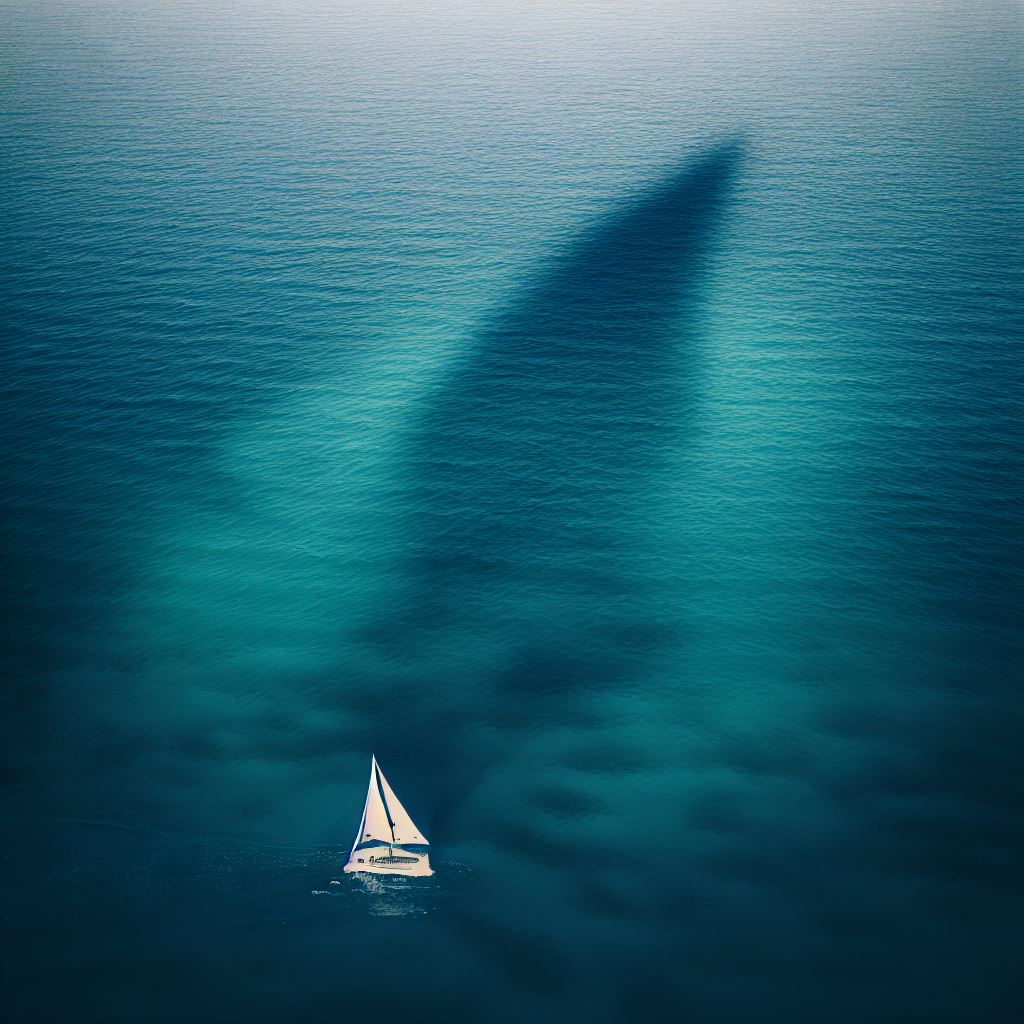
I feel that now the adventure truly begins. Like turning the first pages of a novel, when the analytical mind weighs every sentence while quietly measuring the promise of the chapters still to come, I have spent these first days trying to understand the meaning of this peculiar undertaking. It is an emotional calculation, if such a thing exists, an attempt to build empathy with something made entirely of expectations, sensations, and carefully assembled justifications.
And little wonder, considering the risks inherent in a voyage of this magnitude. My reluctance to throw myself fully into this challenge came from the fear of eventual disenchantment: the possibility that the novelty of places and of those who inhabit them might fade into a routine of gestures and conversations, into days so alike they blur into one another.
As I told you, I feel that now I have finally shed the burdens that kept me at a distance from emotion. Now, the adventure truly begins.
“It’s more than an adventure, it’s the hero’s journey,” was the reaction of our first guest crew member, José Campelo, after the captain described the voyage around the world. Owner of a café in Vila do Porto, on the island of Santa Maria, and a collector of Marvel and DC comics, “Zé” Campelo had been on the mainland hunting for second-hand books when he signed up through the Nómada’s online page, tempted by the chance to sail home by sea.
Seated on the starboard side of the deck, reclining against the canvas windbreaks along the guardrail, he spoke like an explorer returned from distant lands, recounting the marvels of the world to those who had remained safely within the tranquillity of familiar routines.
“I’ve travelled all over the world, truly all over. India, Japan, Latin America, Canada, the States – I’ve family there, of course – and I won’t even start on Europe. I’ve even been to Africa, and not just the tourist places either, but among traditional tribes themselves. And every story I heard, every myth those peoples told, shared the same underlying structure.”
With broad circular gestures tracing vast distances through space and time, he described the cycle of the hero’s journey: departure from one’s homeland after receiving the call to adventure, often aided by someone wiser who guides the hero towards an unfamiliar world; then the trials and setbacks, the confrontation with a great obstacle, the descent into crisis before eventual transformation, sometimes through a symbolic death and rebirth, until the treasure is attained. Finally comes the return home, where the hero is no longer the same person who departed and, changed by the experience, resolves to reshape their former life.
“This shall be your journey,” he declared, “and your lives will not be the same once you return to your port of departure.”
“Ahm…” interrupted Carlos Sage, the other passenger, seated on the port side with one foot braced against the bench to keep himself steady against the yacht’s slight lean under the wind. He was an air traffic controller temporarily assigned to Santa Maria to investigate several unusual incidents. “Doesn’t that sound a bit like… baloney?”
Zé Campelo’s expression froze as though a seagull had dropped a handful of guano onto his head.
“Excuse me?” he asked.
“Ba-lo-ney,” repeated Carlos Sage, the final syllable prolonged like an arrow. “What you’ve just described sounds like a generalisation built on subjective observation. How many cultures tell stories that don’t fit that model?”
“The stories people tell themselves, their myths, are mirrors reflecting the same faces beneath different masks,” Zé replied after a long pause. His voice remained calm, free from any desire to convert. “The outward forms change, naturally, but underneath lies the same structure: the call to adventure, the confrontation with the shadow, transformation through trial, and the return bearing something valuable for the community.”
The captain frowned slightly, as though he had heard something creak somewhere aboard the boat.
“That’s an attractive generalisation, I’ll grant you, but also a dangerous one. Do all cultures truly value the same idea of heroism? Perhaps not all societies place value on individuation, sacrifice, or even personal quests.”
Zé nodded slowly, in no hurry to respond.
“Yes, the differences exist. But I’m not speaking about strict uniformity of content, I mean unity of function. Myths do not need to share the same symbols or literal narratives to fulfil the same psychological role: guiding human beings from one stage of life to another, from one state of consciousness to the next. They are maps of transformation.”
“But maps of what, exactly?” the captain pressed. “Anthropology reveals astonishing differences in ethical systems, social roles, family structures, even perceptions of time. In some mythologies chaos is seen as the necessary counterpart to order, preventing stagnation and rigidity; in others, order itself becomes the absolute ideal. Frankly, your idea of a collective unconscious sounds rather reductive to me.”
“Perhaps it is,” Zé conceded with an easy smile. “But notice this: even the most radically different cosmologies attempt to explain suffering, the origin of the world, what awaits us after death, and so on. Symbols change, names change too, but anguish and wonder, those are universal. The man of the Arctic and the farmer of the Himalayas may not share a single word, yet both look at the sky and ask: ‘What lies beyond this?’ And from that question myth is born.”
Carlos shook his head immediately.
“Science begins with that same question. The difference is that science gives us verifiable answers. I’m not saying myth has no value, it does, as cultural expression, as art. But once you begin speaking of universal psychic functions, you drift dangerously close to the idea of a fixed human nature, of dogma. And that idea has too often been used to erase differences, justify impositions, and colonise minds.”
Zé fell silent for a moment.
“I’m not suggesting myths tell us what to think. Only that they help us feel less alone in our passage through life. Science illuminates the outer world; myth illuminates the inner one. We need both,” he concluded, taking a sip of water, still seated in the same relaxed posture, as though scrutiny from others were nothing new to him.
Carlos shook his head.
“Mythology may have emerged from the need to give shape to the invisible, or to cope with traumatic natural events such as death. When we didn’t understand how the stars moved, we said they were the eyes of the gods. But we no longer need such stories to understand the world.”
“In the end, science tells stories too,” countered Zé Campelo.
Carlos grunted softly before continuing, now with a trace of sarcasm.
“If they are stories, they are very different kinds of stories. Science proposes hypotheses, tests them, and constantly corrects itself.” Then his tone softened. “Though I admit there is narrative beauty in the way we understand the universe. Take the Big Bang. It’s almost poetic.”
“Exactly! The Big Bang is the modern creation myth. An absolute point of origin, the omphalos of the universe, the primal matrix. Apollo firing the first arrow of light into primordial chaos. Science has created a mythology; only now the priests carry telescopes instead of incense.”
Carlos laughed aloud.
“Priests…” he muttered, taking a deep breath. “The evidence we possess is concrete. We know there was an initial expansion, we have proof. We do not need Apollo firing arrows into primordial chaos to explain it.”
“And who says some of us don’t need that distortion in order to live?” Zé replied calmly. “Last week, while boarding a plane to the mainland, I met an astronaut who told me how everything changed when he first saw Earth from space. That tiny blue sphere without borders… You see? That was revelation, an encounter with something greater than himself. It’s difficult to make sense of the universe through the laws of gravitational attraction alone.”
Carlos sighed, twisting his face as though restraining an inward reaction.
“I understand the emotional impact the universe can produce, scientific discoveries themselves can provoke it. But merely seeing Earth from another perspective doesn’t mean we need alternative explanations for facts, nor should we turn science into a religion, as some already have.”
“Of course not. It becomes a framework for new myths.”
“What? Black holes, dark matter, entropy?”
“Perhaps. But not as gods with names, as metaphors. That is far preferable to mythologies pretending to be science. When religions claim that some divine entity created the world, and also authored a manual explaining how to live within it and interpret it, we become trapped in dogma. There’s no room left for contradiction. Which is a kind of hell,” he added dryly.
Carlos smiled.
“Religions are constructions, symbolic systems created to give shape to the mystery of existence. Problems begin when metaphors are mistaken for facts, and symbols for dogmas.”
“Like reading the Bible literally?” the captain asked.
“Or the Qur’an, or the Rigveda, or the Torah,” Zé completed. “The moment a myth is forced to become historical truth, it loses its power. It becomes a weapon, a border, a flag. The purpose of myth is to open, not to close. To unite, not divide.”
“You won’t make many friends in certain circles saying that. Calling religion mythology sounds, to many, like belittlement, as though you’re saying they live inside fiction or fantasy…”
“Which isn’t entirely untrue…” Carlos muttered under his breath.
“Besides,” the captain added, “for many people religion is their primary, perhaps even their only, identity. They define themselves through belonging to one faith in opposition to another.”
“And that,” said Zé, “is precisely why the idea of religion as myth is so fiercely resisted by those invested in one religion or another. To think of religions as metaphors, as personifications of our deepest experiences passed down through generations, has two consequences: it dissolves the claim of uniqueness each religion makes for itself, and it reveals that traditions are not immutable. They evolve. For instance, one no longer sees people openly speaking of adulterous women, much less stoning them.”
“That’s where you’re wrong,” I interjected. “Plenty of idiots still try.”
Zé nodded gravely.
“Exactly. Because once mythology hardens into religion, it loses the ability to read itself metaphorically. It becomes literalist, dogmatic, demanding obedience and belief. A monolith incapable of reflecting the fluidity of human nature. What was once a bridge to mystery becomes a wall.”
“And those who build walls fear what lies beyond them,” observed the captain.
“And forget that the hero’s journey begins precisely when the hero crosses the village wall, when they leave the known in search of the unknown,” added Zé.
“And science? Where does it fit into all this?”
“Science did not kill myth, it merely gave it new forms. Quantum entanglement echoes the ancient idea that everything is connected. The mystery remains. Only the language has changed.”
Carlos Sage shrugged with an air of resignation.
“So you’re saying that even in an atheist world there can still be religion?”
“Not religion in the sense of blind worship, but in its original sense: religare, to reconnect. Science may yet become the engine of a new planetary mythology. One founded not on faith in an ancient book, but on wonder before the cosmos,” Zé replied. Then, turning towards the captain as though seeking agreement, he added: “We navigate the waters of the soul with the sails of imagination and the helm of reason. And myths, when read wisely, can still point north.”
Captain Jackdaw remained silent for a long while, his hat tilted to shield his eyes from the slanting light as though absorbing the thought.
And the conversation did not end there. The debate continued throughout the day. Zé Campelo appealed to a universal unconscious binding all human beings together, while Carlos Sage invoked the necessity of evidence and measurable data. Finally, after supper, a silence settled over us that belonged neither to victory nor defeat. Captain Jackdaw rose to adjust the sails and prepare for the night watch, murmuring only as he passed me:
“In any case, it’s good to know we can count on both, stars in the sky and stories in the soul.”
I confess I found myself divided between Sage’s scientific outlook, that ideal of objectivity which frees us from charlatans, and Campelo’s mythical reading, so deeply connected to human experience that it seems to escape the dry mechanical causality of other forms of knowledge.
And now, having written all this to you and reflected on everything that was discussed, I find myself wondering: are the stories we tell reflections of what we are, or are we reflections of the stories we tell?
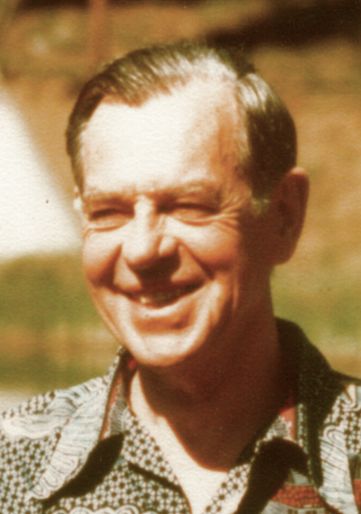
Joseph Campbell
Joseph Campbell (1904–1987) was a renowned American mythologist, writer, and professor, best known for his studies on comparative mythology and religion. His most influential work, The Hero with a Thousand Faces, introduced the concept of the “monomyth”, or the “Hero’s Journey”.
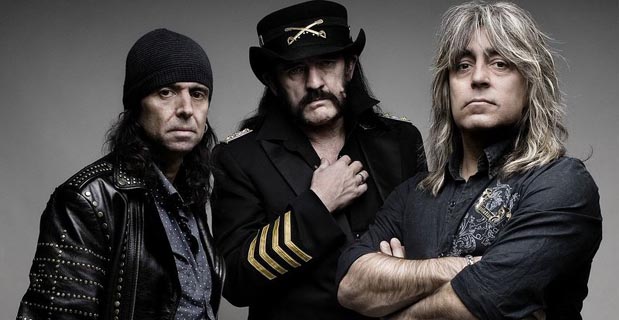
Podemos ser heróis
Created by David Bowie together with Brian Eno, the song has been performed by several artists, including David Fonseca and Rita Redshoes. The version by Motörhead gives it a rather peculiar meaning. Yet the original song will forever remain inseparable from Christiane F. – Wir Kinder vom Bahnhof Zoo.
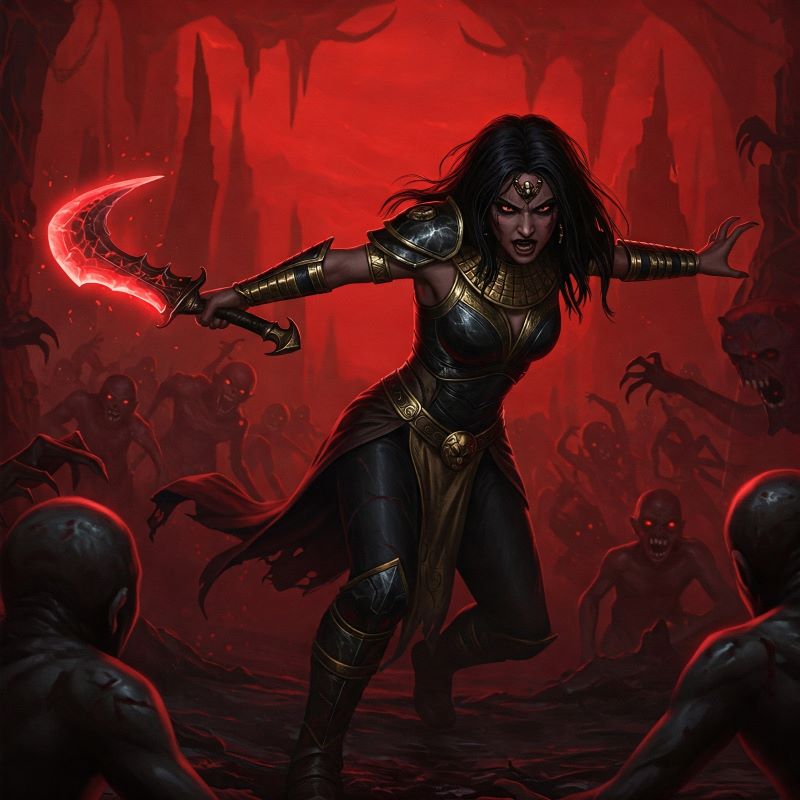
Heroínas com letras grandes
Alongside the Hero’s Journey, some scholars have proposed an alternative cycle for heroines, one that seeks to overcome the female passivity present in Campbell’s original framework.
Excluindo as imagens criadas pelo autor deste blog, as imagens utilizadas neste post têm as seguintes lincenças:
Joseph Campbell: https://pt.wikipedia.org/wiki/Ficheiro:Joseph_Campbell_%26_Joan_Halifax.jpg
Motorhead: https://en.wikipedia.org/wiki/Mot%C3%B6rhead


Termos e Condições