
There’s a kind of hesitant calm when night falls over the sea. To me, it feels like a remnant of childhood, when my parents would switch off the bedroom light and I’d lie there in the dark, watching the faint shadows made by the light slipping through the crack in the door. My heart would start racing, my senses on edge, straining to catch the slightest sound or movement in the half-light. But after some moments, it would settle again as soon as I felt convinced that the height of the bed and the weight of the blankets were enough to keep anything at bay. The sea at night is like a dark room, its vastness making you feel just how alone you really are.
I don’t mean to scare you with this. I just want to convey how intense it is to be alone at the helm, surrounded by the absence of any real visual reference points. The constant motion of the waves makes it impossible to get a sense of where I am in space and, although I can hear water around me, I’ve never felt so aware of the possibility of nothingness.
The captain handed me the first watch until 2 a.m. the way someone casually hands you a wooden spoon and tells you to keep an eye on the pot. He’s resting in his cabin, snoring in fact. He seems to have a lot of faith in the two weeks of training I did with him on the Sado. Nothing much is expected to go wrong, the course is set and all I have to do is keep us on it; in truth, the autopilot does almost everything. I just need to check now and then that the wind and the swell aren’t causing any trouble. So, I took the chance to write you this first message, which I’ll send when we’re back on land.
You’re probably still trying to work out why I’m doing this. I asked myself the same thing more than once before and after we left Setúbal. Truth is, I’ve always wondered where I was going and what I was doing. Maybe the answer lies somewhere in the skipper’s ramblings.
“There comes a point in a man’s life… and a woman’s too… when you start looking back int the past a bit too much,” he said a few days ago, as he set down one of the boxes of supplies we were loading onboard. He straightened up slightly, easing the strain on his back, eyes fixed on the horizon. “Before you know it, you spend more and more time going over what’s already behind you. That kind of inertia… that’s the beginning of the end.” He pulled a face as he said it, as if the words had some sour taste.
“But it matters to look back. It’s part of making sense of your life,” I said, smiling.
He stopped, hands on his hips. The smile came a second later, as if he’d decided on it.
“That’s true. An unexamined life isn’t worth living, says the philosopher” he responded, picking up the loading again. “Most people are stuck up to their necks in quicksand and can’t see past what’s right in front of them. Many, very many,” he added, shifting his grip on the box, his fingers already strained, “don’t even realise it, and the highlight of their lives is coming home from the shopping centre with a sixty-inch telly to hang on the wall.”
“Not everyone’s like that. More and more people are active, doing interesting things in their free time.”
He dropped the box onto the deck with a dull thud and looked at me for a few seconds. He took a deep breath. I couldn’t tell if it was to recover or because my comment had irritated him.
“Those are the others,” he said, heading back to the quay for another box. “They flail about and end up sinking even deeper, travelling to exotic places or chasing thrills through extreme activities.” He raised his voice as he lifted a heavier crate. “They’re hooked on all this modern ‘live your life’ nonsense and don’t even realise they’ve turned into selfish hedonists.” He balanced the crate on the edge of the boat, clearly drained from talking and lifting at the same time. “To me, they live in the materialism of memory. They spend their time collecting selfies so that later, when they’ve slowed down, they can look back and tell themselves they really lived.”
I didn’t push it. I just stood there watching him pick up the crate again, trying to see where that cynicism came from, the kind that makes someone think they’re somehow above it all.
He came back up from inside the boat, wiping sweat from his forehead with his forearm, then went down to the quay again and leaned lightly against the rail, watching the water move along the hull. He turned to me before carrying on.
“Being alive isn’t just about staying busy or doing something new every day or digging around inside yourself trying to uncover some ‘authentic’ version of who you are. Being alive is about being in tune with your nature and with the rhythm that shapes your time.”
He held my gaze for a moment longer than felt comfortable, as if checking whether the words had landed. Then he gave a small nod and picked up another box I’d set aside.
“A lot of people leave because they want to escape what they are in their routines, but the truth is, you can’t escape yourself…” he called out as he climbed back onto the boat, “…or the things that have marked you.” His footsteps on the gangplank echoed hollowly, almost keeping time with the sentence.
He stayed inside the yacht for a while, and I finished sorting the last of the boxes on the quay. As I straightened up, stretching out my arms and legs, stiff and aching, he came back onto the deck with the serious look of someone who’d been thinking things through.
“I’m setting out on this journey to rediscover my life’s narrative,” he said from the boat. He sounded sure of himself, but he didn’t quite meet my eyes, as if the answer wasn’t fully settled.
He came back down and started dividing the boxes into two piles, one for me, one for him. I could tell he was still working something out in his head. When he spoke again, his tone had shifted, more open now.
“I could do this in my head, sitting at home, but something in me pushes me to do it out here, at sea.” We each picked up a box and carried it over. “What matters is asking ourselves how we want to write our story, with all the twists a good story needs, and what we want to add to the whole powerful human play.” He nodded slightly, as if expecting me to agree, then paused. “It’s not about finding some ‘true’ identity. Most of us aren’t just one thing…” He laughed, then added, louder as he stepped onto the boat. “Well… maybe everyone except Cavaco Silva.”
I left my box on deck for him to stow and went back for the rest. A few minutes later, he was next to me, checking his watch.
“And while we’re thinking about life, we can carry boxes,” he said, making a small gesture that clearly meant less talking, more doing. “We don’t need our hands to think,” he added over his shoulder, already heading back with another crate, whistling some tune to bring the conversation to a close.
Thinking about life. That’s all I’ve been doing since we left Setúbal, questioning myself. After the first shock of being at sea, when the body settles after the rush of adrenaline, I spent a long time thinking about this whole idea of setting off around the world with a captain who seems to be going through some kind of midlife crisis. As you remember, it was Silva who introduced us, after the tattoo incident.
“Captain, here’s someone you can rely on for your trip.”
The captain looked me over without much subtlety.
“She’s got nothing tying her down. She had the good fortune of being let go from a job that wasn’t right for her, and she’s always had a taste for adventure. Bit of a temper sometimes, and a terrible loser, so best not play cards with her.”
I smiled awkwardly. All these years later, Silva still teased me about the kicks I used to give him under the table when I lost. Thinking about it now, I realise he hasn’t changed at all in twenty years. Already old back then, bent over, leaning on his stick…
In any case, neither the captain nor I talked about our pasts, but we both know about the perpendicularities – I still stumble over the word – that threw each of our narratives off course. Apparently, he even did some therapy with those Wordsworth and Coleridge types, who advised him to set off on a round-the-world trip, which makes no sense to me. Should someone dealing with that kind of thing really be crossing paths with others, risking collisions between different narrative planes? And what if there are two people involved? I don’t know…
Anyway, he seems to have a solid plan: three years, eight months and two days to sail around the world on Nómada, a 45-foot ketch, stopping at 222 ports. When he told me, he almost counted it off on his fingers, only the hours and minutes were missing!
“That is, unless there are any detours. It also depends on the crew we pick up and whoever decides to join us along the way.”
He gave me a quick look, sizing something up.
“I’ve put an ad online for people who might want to come aboard for part of the journey.”
Two weeks later, after a basic crash course in sailing, I was ready to go. I didn’t overthink it, it just felt like something I had to do. There’s nothing tying me to land, and I can do what others have done: set sail for a while and see the world’s waters. My savings will keep me going for a bit, and renting out my flat helps too, though I might try some freelance work if the internet allows it.
I suppose I’ll have plenty of time to think about life and everything else. I’m due back around early 2030. Don’t worry, I can always catch a flight home sooner if I need to. For now, the first stop is Baleeira. We should reach Sagres tomorrow, where we’ll pick up two more crew members. I can already feel a kind of homesickness creeping in for my blue-river city, and I catch myself humming that old Xico da Cana tune.
It’s four o’clock. Time to wake the captain. Especially now that the wind has shifted slightly; I can feel it more from the side, pressing my coat against my arm.
“No one calls him Joaquim do Ó anymore,” Silva once said, half-smiling as he swirled his glass, enjoying the story more than the wine. “The foreigners on his tours kept mangling his name, so he switched to an English version. That’s what everyone calls him now.”
A name is more than just sounds or letters. It carries something of who we are. Why shouldn’t we be able to shape that ourselves?
“Call me Jack Daw.”
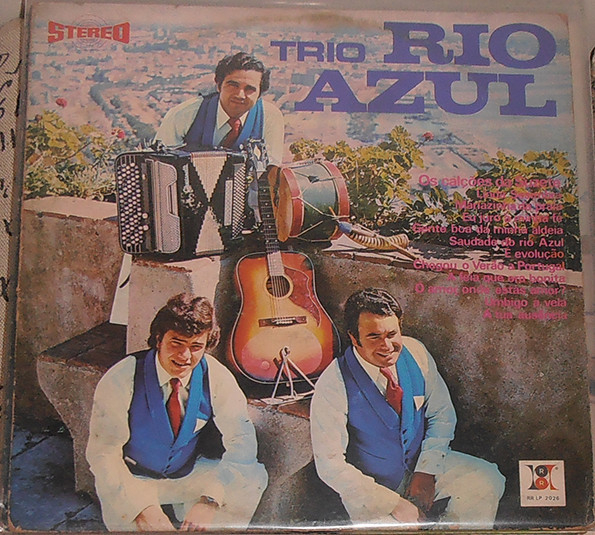
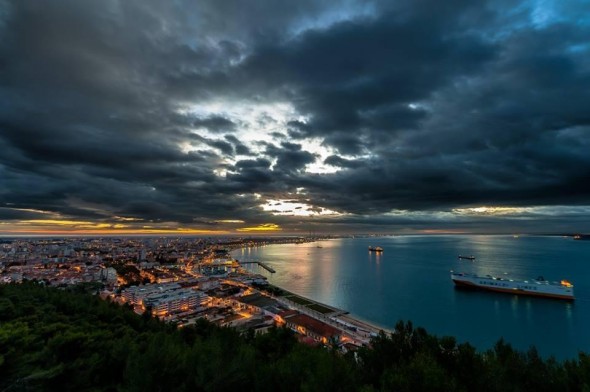
The city by the blue river
My hometown, the place I’ve left and come back to over and over, always with that strange feeling of both belonging to Setúbal and not quite fitting in.
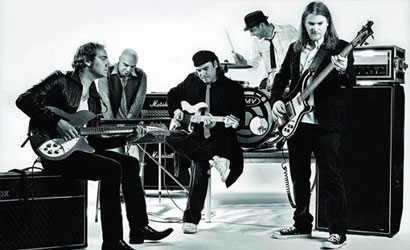
From the sea to the land
The album Ser Maior – Uma História Natural has a taste of the sea. This concept album by Delfins, released in 1993, tells the story of a dolphin turned man and explores themes of growth, transformation and identity.
Excluindo as imagens criadas pelo autor deste blog, as imagens utilizadas neste post têm as seguintes lincenças:
Imagem do Post: Johannes Plenio https://unsplash.com/photos/DKix6Un55mw
Setúbal: https://www.adn-agenciadenoticias.com/2016/01/setubal-debateu-parcerias-e.html
Trio Rio Azul: Unkown author https://fonoteca.cm-porto.pt/discos/trio-rio-azul-475062/
Delfins: https://xmusic.pt/images/entrevista/fernando_cunha/Fernando_Cunha_05.jpg


Termos e Condições